

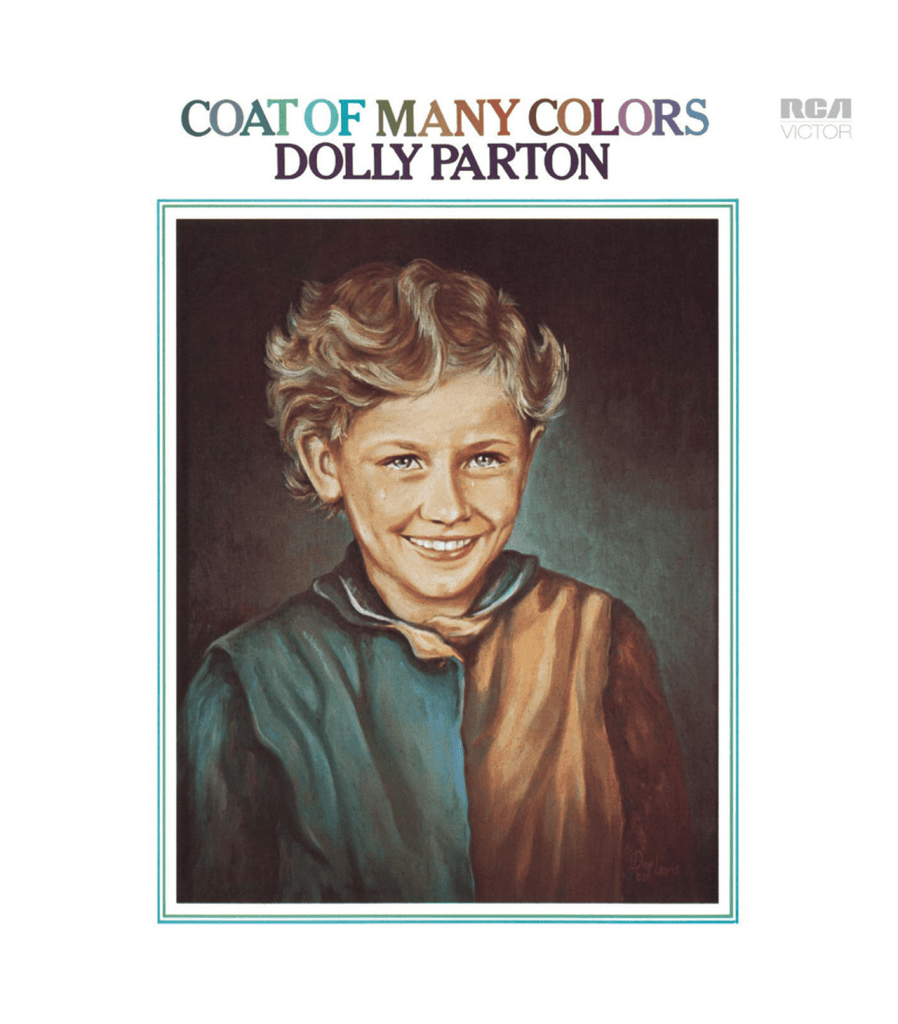
Dolly Parton told us who she was, one song at a time
My introduction to Dolly Parton came at 7.
My mom, as the lead alto in the church choir, had some sway with our music director and she used it to snag me the occasional solo in front of the congregation. I sang hymns, some contemporary Christian songs. Then one day, Mom brought home the sheet music for “Coat of Many Colors.”
The song wasn’t in the Baptist hymnal, but she seemed confident it would pass muster (after all, who doesn’t love Dolly?). I practiced at home, committing the lyrics to heart.
I took my position on stage by the pulpit one Sunday, facing pews stuffed with people, and scanned the crowd for my mom as I started to sing. For the first time during one of my performances, she wept.
My mom drew the parallels between Parton’s song and her own life — she, too, had grown up as an impoverished kid from a big family, and she’d learned a little bit about turning humble beginnings into something greater. That’s what brought her to tears, not my tinny soprano.
That day I realized how music — how storytelling — can move people. And over the course of her seven-decade career, Dolly Parton moved many. Parton died Tuesday at 80, leaving behind a catalog of thousands of songs. She was a country icon, a businesswoman, a philanthropist and a beloved figure who united Americans even in the most divisive times.
Above all, she was a storyteller of the highest caliber, who used transportive performances to inspire, uplift and — the main mandate in traditional country music — tell it like it is.
Writing was compulsive for Parton. “I ain’t never far away from a pencil and paper or a tape recorder,” she told The New York Times in 2002. “I write every day, even when I’m on a plane, in the tub or on the bus. It burns in me.”
Emmylou Harris, another prolific songwriter and Parton’s collaborator in the supergroup Trio, once said: “I’ve watched Dolly writing one song while she’s singing another.”
The best way to honor Parton’s extraordinary career arc and life, then, is through the songs she left behind. These five trace her journey from Appalachia to worldwide superstardom, and they’re rooted in the values and messages that she held closest.
The record as autobiography: “Coat of Many Colors” (1971)
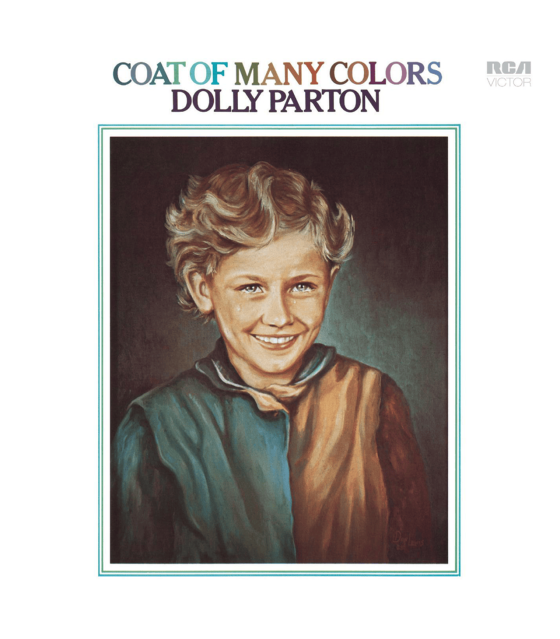
“As she sewed, she told a story from the Bible she had read
About a coat of many colors Joseph wore, and then she said,
‘Perhaps this coat will bring you good luck and happiness.’
And I couldn’t wait to wear it, and Mama blessed it with a kiss.”
Parton, the fourth of 12 children, was born in a one-room cabin in the Tennessee mountains. She grew up in poverty, and her mother, Avie Lee Parton, often made clothes for her children.
As one fall chill set in, Avie Lee made her daughter a coat cobbled together from scraps of fabric, likening it to Joseph’s coat of many colors in the Bible. But when Parton wore it to school, she was mercilessly mocked. Her schoolmates shut young Parton, who was scared of the dark, in a coat closet.
“They just made fun of my little coat,” Parton said in the 2020 book “Dolly Parton: Songteller, My Life in Lyrics,” which she cowrote with journalist Robert Oermann. “I had seen so much more in that coat than what Mama had sewn, things sewn into my body, my soul, my everything. Mama had made it and told the story and made it all seem so real. It was so mind-warping and heart-shattering to me when they made fun of it. In my mind, I thought I looked just like Joseph.”
“Coat of Many Colors” detailed that experience, an early example of her hallmark autobiographical songwriting that she would utilize two years later on the concept album “My Tennessee Mountain Home.” An early hit for Parton, “Coat of Many Colors” would go on to reach No. 4 on the country charts and inspire a 2015 NBC made-for-TV movie.
Though she couldn’t have known it at the time, this formative experience would be something that touched millions.
“At the time, I thought, ‘Why is this happening?’ Now I know it was so I could write that song,” Parton wrote. “It really is true that ‘God works in strange and mysterious ways His wonders to perform.’ You never know when you’re going through things what is actually going to turn out to be a blessing. So it’s worth the suffering.”
The beginnings of “9 to 5” feminism: “Just Because I’m a Woman” (1968)
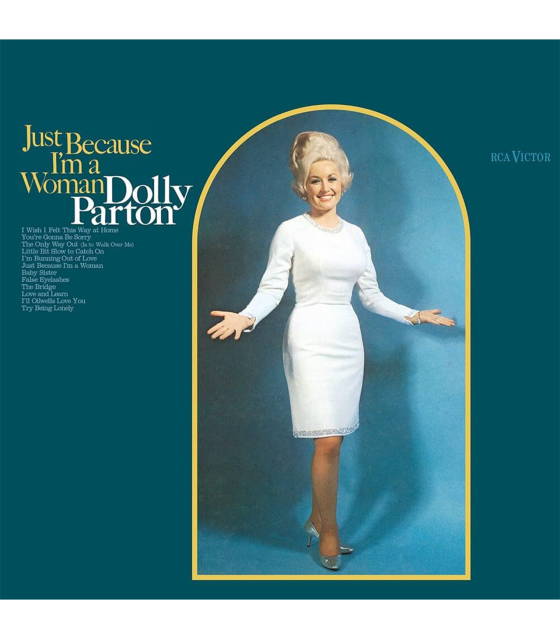
“Now I know that I’m no angel
If that’s what you thought you’d found.
I was just the victim
Of a man that let me down.
Yes, I’ve made my mistakes,
But listen and understand:
My mistakes are no worse than yours,
Just because I’m a woman.”
Parton rejected many labels, including “feminist.” But there is an undeniable throughline in her work of examining double standards, gender roles and the status quo for women.
One of the earliest examples of this was 1968’s “Just Because I’m a Woman,” which appeared on her second solo album.
The song was inspired by a conversation with Carl Dean, whom Parton married in 1966 and stayed with until he died in 2025. A few months after they married, Dean asked her if she had ever been with someone else. Parton answered truthfully — and Dean was “crushed.” “I was kind of an outcast for a little while there,” Parton wrote in “Dolly Parton: Songteller.” (On the origin of the song, Parton would later explain to Rolling Stone: “My husband doesn’t particularly like for me to tell this, but he’s old enough now, so he don’t really give a big shit.”)
In “Just Because I’m a Woman,” Parton puts a magnifying glass to the conversation, reasoning that a woman’s “mistakes” are no worse than a man’s in the same position — an uncommon theme in music at the time, especially given the social mores of country radio.
Though the song reached No. 17 on the charts, Parton dealt with a country radio dynamic that, decades later, The Chicks would come to know well: some stations refused to play it. Still, “Just Because I’m a Woman” reached wide audiences overseas, hitting No. 1 in South Africa.
Undeterred by the reception to “Just Because I’m a Woman,” Parton would go on to write the karaoke mainstay “9 to 5” and, in 2018, a song about women gaining the right to vote through the 19th Amendment. Parton would again be shut out by radio stations in 1991 with “The Eagle When She Flies,” which details the gentle but resolute strength of womanhood.
“Lots of DJs wouldn’t play ‘The Eagle When She Flies,’ because they thought it was such a women’s-lib song,” Parton said.
The crossover: “Here You Come Again” (1977)
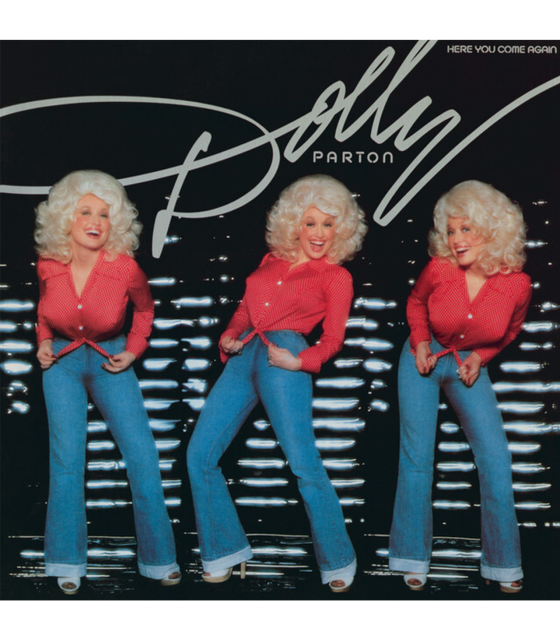
“All you gotta do is smile that smile,
And there go all my defenses.
Just leave it up to you, and in a little while,
You’re messing up my mind and filling up my senses.”
In a 1978 interview with Barbara Walters, Parton — then on the cusp of a cross-genre breakthrough — defended her decision to expand beyond Nashville.
“I’m not making a crossover from country to pop. I’m trying to be accepted in the pop field as well as the country field,” she told a skeptical Walters. “I feel my music is its own music, just like I’m my own person. I mean, I write ‘em, I sing ‘em, I have my own way of singing ‘em, my own way of doing it. And as a businessperson, I like to think there is more money to be made than the money I’ve been making. I’ve been working too hard, too long, for too little.”
Her first big pop hit, though, was one of the few hits Parton didn’t pen herself.
“Here You Come Again,” by the legendary songwriting couple Barry Mann and Cynthia Weil, represented an intentional step toward being a household name. The euphoric, string-leaden ode to encountering a still-promising ex catapulted Parton from the country music charts to the mainstream, hitting No. 3 on Billboard and landing her a Grammy nomination for Best Female Pop Vocal Performance.
But Parton, always loyal to her base, insisted on a prominent steel guitar presence by Al Perkins, ensuring that no one could deny her country bona fides.
This song — and Parton’s continued trajectory as a multi-genre artist — laid the groundwork for women like Shania Twain, Taylor Swift and Kacey Musgraves who would follow in her footsteps decades later. Parton made the playbook in a genre that often holds women in contempt for daring to step beyond its boundaries.
“My dream was always to make as many people happy as I could in this life,” Parton told Walters.
Activism: “Travelin’ Thru” (2005)
“Questions I have many, answers but a few,
But we’re here to learn, the spirit burns, to know the greater truth.
We’ve all been crucified and they nailed Jesus to the tree,
And when I’m born again, you’re gonna see a change in me.”
Parton rarely waded into politics. Three times she turned down the Presidential Medal of Freedom, one of the United States’ highest civilian honors — twice from the Trump administration and once from the Biden administration.
In 2018, Parton evaded questions from ABC’s David Wright about President Donald Trump, who was then in his first term: “I learned a long time ago, keep your damn mouth shut if you want to stay in show business. … I’m not in politics, I’m an entertainer,” Parton said.
Despite a lack of public pronouncements, Parton’s activism was present in her work.
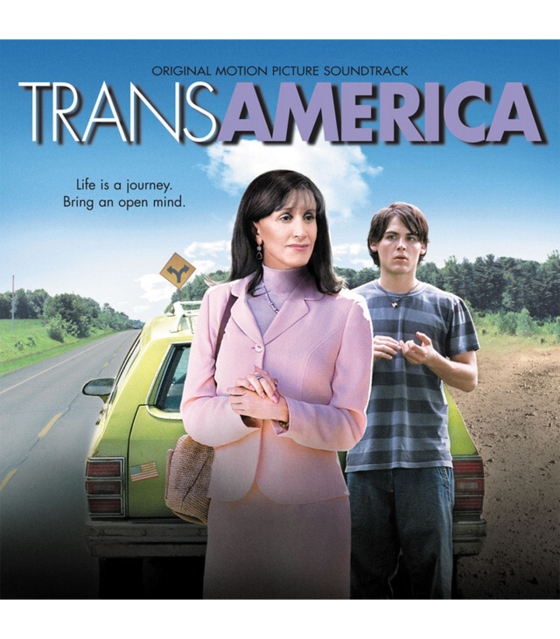
Film director Duncan Tucker asked Parton to write an original song for his 2005 film “Transamerica,” which follows a trans woman’s cross-country road trip with her long-lost son. Parton, who had a transgender friend and relative, later recounted in “Dolly Parton: Songteller” that she’d be “happy to make a stab at that.”
“I completely relate to anybody who’s not allowed to be themselves and to be all that they feel they can be. I know gay people who are not accepted and have to live in the shadows,” she wrote.
Parton said that she intentionally wrote the song, “Travelin’ Thru,” “from a broader scale,” but it represents only one of the many instances of her using her art and platform to support LGBTQ+ people. In “Family,” included on 1991’s “Eagle When She Flies” (the same album that birthed the “women’s-lib” track that was shunned by radio DJs), Parton posited that LGBTQ+ people should be accepted for who they are. She would go on many times in her career to stand up for LGBTQ+ rights and acceptance, often citing her Christian faith as a basis for the belief.
“Travelin’ Thru” would net Parton her second Academy Award nomination for Best Original Song; she performed the song at the 2006 Oscars. She ultimately lost to “It’s Hard Out Here for a Pimp.”
The winners, Three 6 Mafia, “were Tennessee guys from Memphis, so that was fine,” Parton wrote. “‘It’s Hard Out Here for a Pimp,’ and it’s hard out here for a country singer, too.”
Untouched mountain music: “Little Sparrow” (2001)
“If I were a little sparrow,
O’er these mountains I would fly.
I would find him, I would find him,
Look into his lying eyes.
I would flutter all around him
On my little sparrow wings.
I would ask him, I would ask him,
Why he let me love in vain.”
I saw Parton for the first time live in 2016 on her “Pure and Simple” tour. Pure and simple, to her, involved a lot of rhinestones — on her outfits and on the seven instruments she rotated through during her three hours on stage.
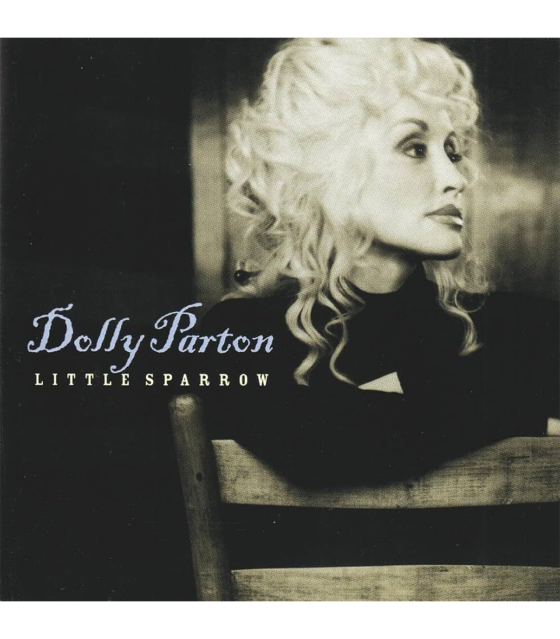
After an intermission, Parton launched into a sparsely instrumented version of “Little Sparrow,” which she often performed a cappella. Her silvery soprano reached to the farthest corners of the basketball arena — untouched by time, arresting in its clarity.
“Little Sparrow” was her ode to her roots. The song is Parton’s take on “Come All Ye Fair and Tender Ladies,” an Appalachian folk song that her mother sang to her as a child. The album of the same name was an unapologetic return to her bluegrass over four decades into her career.
It’s a well-trodden country trope to never forget where you come from, yet many people — especially country stars — do. Parton went from singing on a woodpile outside of her family’s cabin to owning a theme park in those same Tennessee mountains where she grew up. It’d be easy to lose touch.
Parton achieved the pop stardom and household recognition she craved, with megahits such as “9 to 5,” “Jolene” and “I Will Always Love You” cementing her legacy. And yet, the pristine mountain country of “Little Sparrow” was consistently praised as one of her strongest recorded and live performances. I suspect that’s because, no matter how far she was from it, Parton remained anchored to the banks of the Little Pigeon River, to her home. Performing her interpretation of a song she had learned as a child, a song that personified the mysticism of the mountains, still felt authentic. It was the storytelling that ran through her from the time she was born. It was Parton, pure and simple.