
The Voting Rights Act has taken two devastating blows. What comes next?
Kristen Clarke was just weeks into her job as the NAACP’s top lawyer this spring when the Supreme Court’s conservative bloc dealt what she described as the second of two “devastating blows” to the 1965 Voting Rights Act.
“We are witnessing the full machinery of government aided by the Court disenfranchising and silencing Black America and hijacking democracy as we know it,” the newly installed general counsel of the country’s oldest civil rights organization responded. Within hours, the NAACP held an emergency town hall to discuss the Louisiana v. Callais ruling’s impacts and outline next steps.
The first devastating blow, Clarke told The 19th in an interview last week, happened long before she joined the NAACP. In 2013, while she led the civil rights bureau of the New York state attorney general’s office, the Supreme Court decided another consequential voting rights case, Shelby County v. Holder.
In the case, out of Shelby County, Alabama, the court’s conservatives invalidated a formula used to determine the parts of the country subjected to the civil rights law’s Section 5, which required areas with a history of racial discrimination to preclear changes to their voting procedures with the U.S. Department of Justice. Chief Justice John Roberts argued that since Congress had not meaningfully updated the formula, it had “no logical relation to the present day.”
Civil rights advocates were alarmed. For nearly 50 years, Section 5’s preclearance mechanism had been a powerful tool to stop discriminatory voting practices before they were enacted. Going forward, voting changes would need to be challenged after the fact using the Voting Rights Act’s Section 2, which prohibits voting procedures and maps that discriminate on the basis of race.
Then, 13 years later, the Supreme Court took aim at Section 2 in Callais. On behalf of the court’s conservatives, Justice Samuel Alito tossed out a Louisiana voting map that had created a second majority-Black congressional district out of six in a state where about one-third of voters are Black. Section 2’s protections should only apply if voters can prove they were intentionally disenfranchised based on their race, not if a policy was seemingly neutral but had the same result, he wrote.
“The Section 2 and Section 5 provisions of the Voting Rights Act were the backbone of this monumental law,” Clarke told The 19th.
“So any honest conversation about where we are following the Supreme Court’s devastating blows to the act in the Louisiana v. Callais and Shelby County v. Holder decisions has to acknowledge that our nation’s most sacred civil rights law has been hit by these devastating blows,” she continued.
In both the Callais and Shelby County opinions, the conservative majority argued it was making only minor adjustments to the law that Republican former President Ronald Reagan said safeguarded the “crown jewel of American liberties” when he extended its protections.
In Callais, Alito called it an “update.”
In Shelby County, Roberts, who has exhibited a decades-long hostility to the Voting Rights Act, wrote that “our country has changed” since the law was enacted. He cited as evidence data from the 2012 elections showing Black voter turnout in the six states originally covered by Section 5 had surpassed White voter turnout.
At the time, liberal Justice Ruth Bader Ginsburg likened Roberts’ reasoning to “throwing away your umbrella in a rainstorm because you are not getting wet.”
The consequences of the conservative majority’s approach to voting rights became clear after Shelby: Without preclearance, Black voter turnout dropped. By 2020, the racial turnout gap had grown to between 9.2 and 20.9 percentage points in five of the six states, according to the Brennan Center for Justice, a nonprofit civil rights organization.
Then came the Callais decision. Civil rights experts warned that it would undo decades of progress in electing Black lawmakers, particularly Black women. Just like Shelby, the ripple effects were immediate: Southern states like Louisiana, Tennessee and Alabama redrew their maps, splitting Black voters into different, Republican-leaning districts and endangering the futures of Black Democrats in the U.S. House.
In response, a coalition of civil rights groups, including multiple NAACP state conferences, launched a voter protection effort called “Freedom Summer,” named for a 1964 voter registration campaign that drew attention to Black voter disenfranchisement in Mississippi.
“Communities are galvanized in this moment and pushing back — and pushing back with intensity — as we’ve seen throughout the South, but those efforts produced mixed results. It brought late-decade gerrymandering efforts to a halt in places like South Carolina and Georgia, but more is needed,” Clarke said.
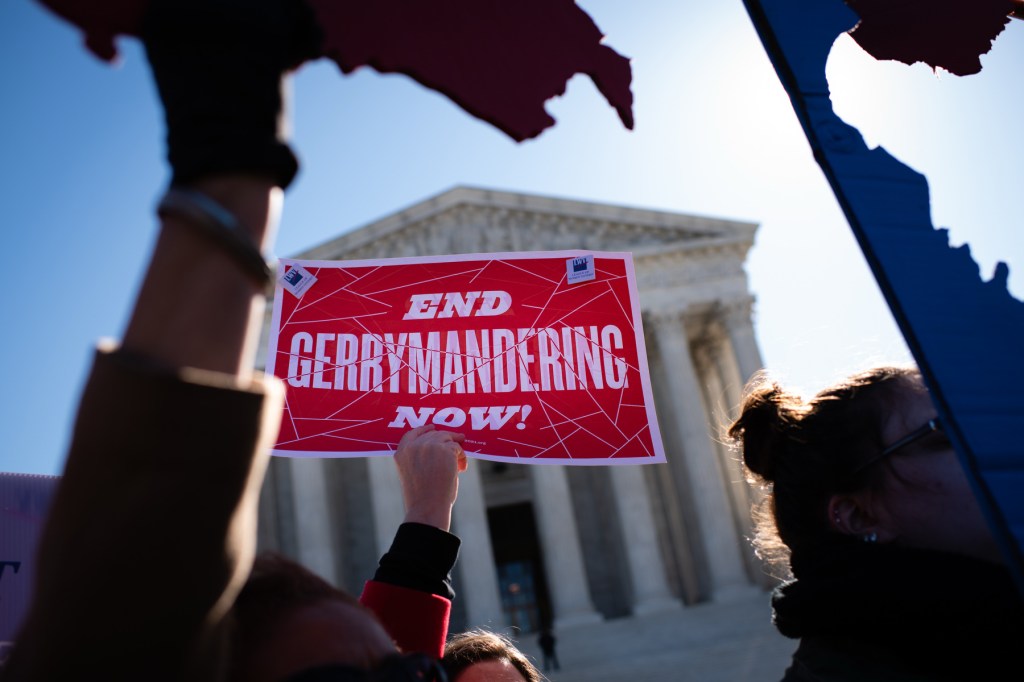
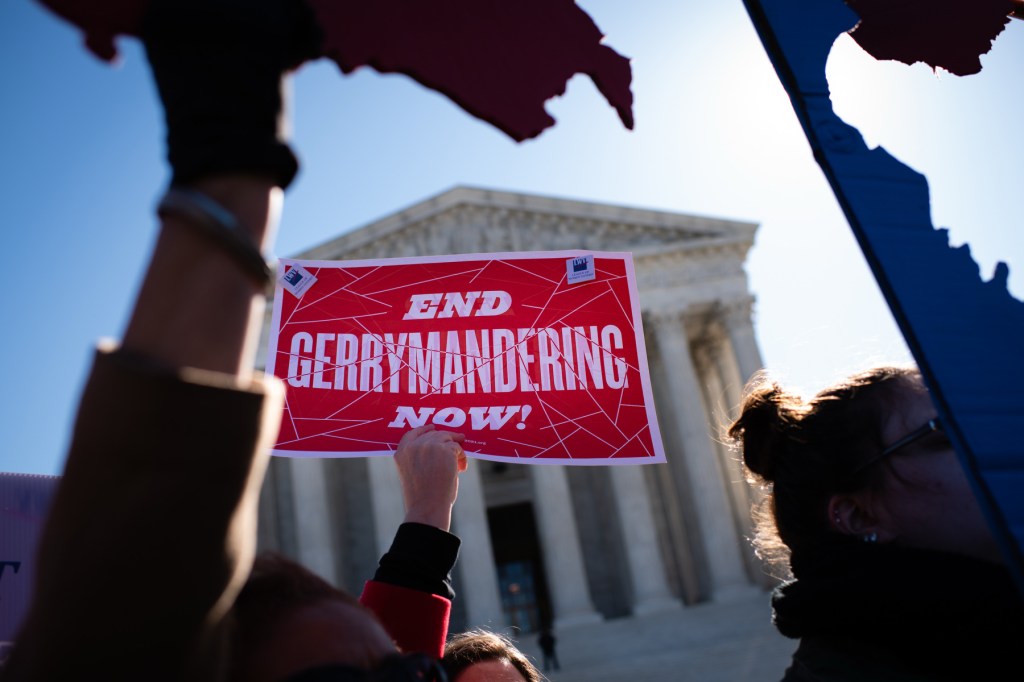
What “more” looks like to Clarke is a “multi-pronged strategy focused on restoring democracy,” she said. A robust response would include Congress passing legislation named for the late civil rights leader and longtime Alabama Rep. John Lewis.
(Sarah L. Voisin/The Washington Post/Getty Images)
The House has approved the legislation multiple times, but it could not get past the Senate filibuster. If it did, Republican President Donald Trump would not sign it — though a different president might. For now, at the state level, “we’ve seen recent and encouraging progress,” Clarke said. Maryland, New Jersey and Delaware are some of the states that have enacted their own versions of a Voting Rights Act.
Clarke also said that Supreme Court reforms, including term limits and increased ethics standards, should be on the table.
“This Supreme Court is losing public confidence at an alarming rate, and the steps that we can and should take to restore the court’s integrity needs to be a necessary part of how we think about restoring, strengthening, and rebuilding democracy,” she said.
The Supreme Court’s approval ratings are at a record low. A Gallup poll released in late September showed that 61 percent disapproved of the court.
Democratic voters distrust the court the most, though trust among political independents has dropped 20 points over six years, and it has also dropped among Republicans to a lesser degree.
Clarke said the path forward also involves protecting what is left of the Voting Rights Act, “though very little remains after the Callais decision.” The Trump administration has rejected reports that it plans to send Immigration and Customs Enforcement (ICE) officers to monitor polls in November. Still, the NAACP was one of nine civil rights and labor groups that preemptively sued, arguing that the Voting Rights Act’s Section 11(b) “squarely prohibit[s]” this type of voter intimidation.
“We can’t afford to sit back and wait until Election Day to see whether ICE will comply with the Constitution and federal law,” Clarke said.
Before joining the NAACP, Clarke served as the country’s top civil rights lawyer for nearly four years in former President Joe Biden’s Justice Department. Her successor, Harmeet Dhillon, recently announced a plan to deploy as many as 1,000 monitors to voting sites. As Clarke spoke to The 19th, the NAACP filed an emergency lawsuit to compel disclosure of the plan.
She believes there will eventually be a “reckoning” for Trump administration officials who have broken civil rights and other laws. A future presidential administration, she added, will present “an opportunity for us to imagine a stronger, more enduring and dynamic government.”
“If there is any takeaway from the first two years of this administration, it is that the guardrails that we thought were in place were not enough,” Clarke said. “Where the Justice Department needs to be is not where it once was.”