‘She knows what we need’: Black women voters say it’s time for Keisha Lance Bottoms
ATLANTA — Donald Trump carved his path to reelection through Georgia, and less than two years into his term, Keisha Lance Bottoms told a crowd here that the president’s policies haven’t just raised prices, “he’s also raised blood pressure.”
“Just yesterday, I met with a woman in Tifton who owns a mortuary, and she told me that even the prices of caskets have gone up,” Bottoms said to a roaring crowd on Saturday at the Cobb Convention Center. “Donald Trump is wreaking havoc for the living and the dead.”
Bottoms is locked in a tight race to be the next governor of Georgia, running on promises to take on rising costs as a mom with a working-class background and generations of Georgia roots. Rarely does she talk about the fact that if she wins, Bottoms would become the first Black woman ever elected governor in United States history. But it’s a milestone that resonates with many voters, especially Black women who say that it would send a message about the direction of their state and their country.
Eva Johnson, 80, traveled an hour to Bottoms’ Atlanta rally. She said Bottoms’ urgency when she talks about the economy reflects her own. “What are we going to do? How are we going to live?” said Johnson, who relies on Social Security. “I like her stamina. I believe that it’s time for women to take their place because of their leadership abilities, and that’s what we need this time.”
Bottoms’ campaign has benefited from Trump’s unpopularity this cycle, largely driven by voters’ anger at the impact of his policies on the cost of gas and food. A high level of enthusiasm for U.S. Sen. Jon Ossoff is also expected to lift Bottoms and the rest of the Democratic ticket. At the Atlanta rally in support of both Bottoms and Ossoff, voters said that the former Atlanta mayor speaks authentically about the issues they care about most, and cited the cost of living, the cost of healthcare, data centers and employment rates for Black women as top concerns.
It’s the third time in a decade that voters in the state are weighing the election of a Black woman to the state’s top job, after twice turning down Stacey Abrams.
And Bottoms faces significant headwinds. Georgia also hasn’t elected a Democratic governor since 1998. She’s taking on Republican Rick Jackson, a billionaire healthcare executive who has flooded the race with his wealth, contributing more than $100 million to his own bid.
At the Saturday rally, Bottoms placards were drowned out by a sea of Ossoff flags. A pile of free yard signs for people exiting the rally didn’t have any with her name on them. Around Atlanta, some voters have reported not seeing much in the way of signage, and Jackson is firmly dominating the airwaves.
At Saturday’s rally, voters said they were firmly behind Bottoms, and some had already cast their ballots for her. Christelle Rejouis, 37, lives in Powder Springs, an outer suburb of Atlanta, and said she hadn’t heard much about Bottoms throughout the cycle but backed her when she cast an early ballot. “I recently started learning about her, and the fact that she came from the same way as us,” Rejouis said. “First of all, being a woman of color, and also her background — working class. She knows what we’re going through, and she knows what we need right now.”
“To be fully transparent, I did not vote for her in the primaries,” said Natasha Holly, 49, adding that Bottoms has since won her over. ”When I saw her in the debate against Rick Jackson, she at least had a plan, and she was able to articulate it. She seems very down to earth and for Georgia.”
Bottoms acknowledged how lopsided funding in the race is impacting her visibility in a late September interview on The Breakfast Club radio show.
“Quite honestly, I can tell you, financially for us, with him having so much more money than we do, it is challenging because you got to pay people. Volunteers are great, but you need to be able to pay people. You want to have signs out. You want to have commercials up. You want to be able to do all these things,” Bottoms said. She then directed listeners to her website. “Whether you’re sending $5 or $100 or a million dollars, it will go a long way.”
Jackson’s massive spending lead has only yielded Republicans a competitive race. A new Atlanta Journal-Constitution poll out Tuesday puts Jackson and Bottoms in a statistical dead heat, with Jackson ahead of Bottoms by a single digit. Recent polling in the race shows Jackson similarly ahead by a small margin.
The AJC poll suggests that Democrats’ enthusiasm this cycle, on top of Republicans’ disaffection, could sway the race. More than two-thirds of Democrats say they are “very enthusiastic” about their choices on the ballot, compared with less than half of Republicans. Black voters were also far more enthusiastic than White voters with just two weeks until the election.
Bottoms won the Democratic nomination easily in May, avoiding a runoff by winning 56 percent of the vote and leading in all but one county.
Heading into November, Bottoms has focused heavily on cost-of-living concerns. To address grocery prices, she is promising to give municipalities the option of doing away with grocery taxes and taxes on diapers, baby formula and feminine hygiene products. She’s also proposing to do away with the state’s tax on car insurance premiums and homeowner’s insurance, and to lower the state’s gas tax. Bottoms also promised to expand Medicaid, a longtime goal for Democrats in the state.
That’s Tiffany Perdue’s top issue this election. The 42-year-old said she buys insurance to help with the costs associated with a disability, an expense that weighs on her ability to buy food, especially with the rising cost of groceries.
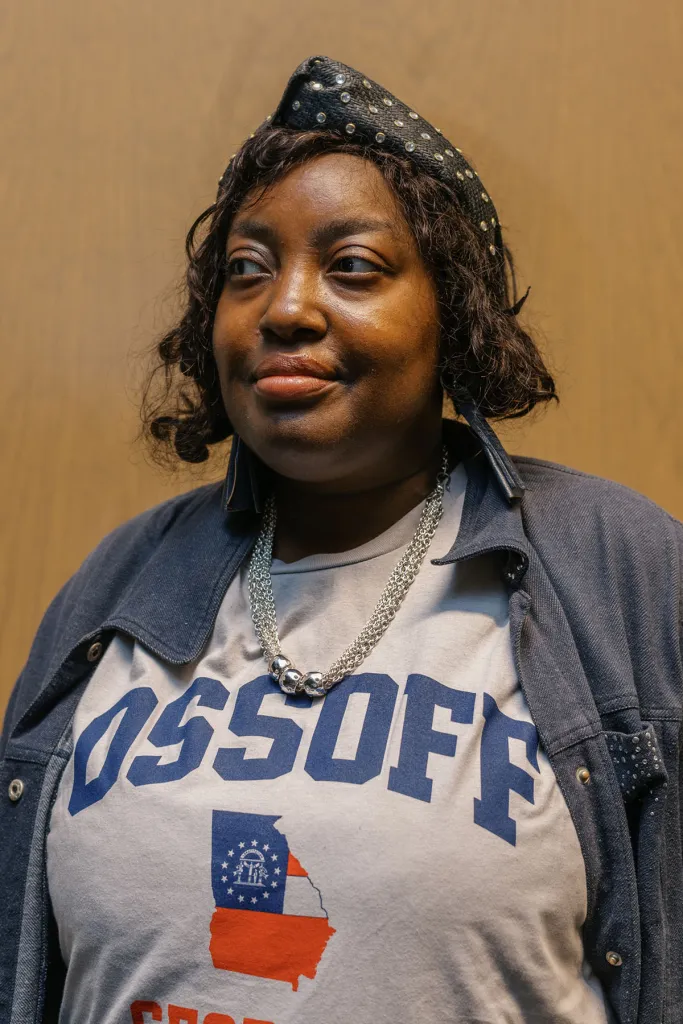
“I think it’s time for change altogether. Not only from the governor, but also in the gold dome,” Perdue said about the Georgia legislature, where Democrats believe they have a chance to flip the House. Perdue said she’s attended two Bottoms events, including an Ossoff and Bottoms rally in Athens that was so packed, she couldn’t get in. She thinks Bottoms’ message on costs may be connecting with voters.
“She knows what she’s doing and she’s qualified,” Perdue said of Bottoms. “She would be right. But we know how Stacey fell short, and it wasn’t, you know, by a lot.”
Brooke Fields, 31, who lives in DeKalb and works in the film industry, said she’s concerned about the high number of Black women facing unemployment, after she herself went without work amid a major structural crisis in her industry.
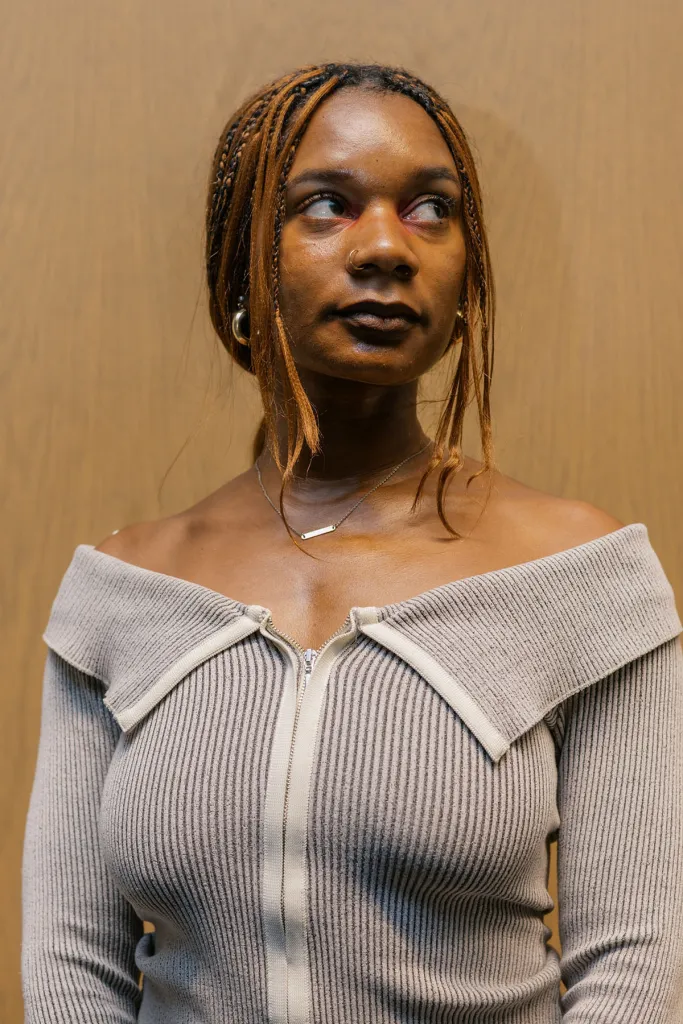
“What happens to unemployed individuals?” she said, citing as an example the threat of eviction. “I’m not going to say that Keisha Lance Bottom is going to change all of that, but I think that we’ve seen what Trump could do and what Rick Jackson could possibly do.”
In the northern suburbs of Atlanta a few hours before the Bottoms and Ossoff rally, Abrams met with a group of volunteers to canvass on behalf of Georgia’s Democratic ticket. Abrams was joined by Higher Heights, a political group working to build political power for Black women.
Abrams spoke to canvassers about her family’s long fight for voting rights, going back to her grandparents, who voted for the first time in 1968. Abrams said that this election, that fight continues.
Republicans’ attacks on voting rights are present here in Georgia. Looming over Black Georgians is the potential for redistricting, made possible by the U.S. Supreme Court’s April ruling weakening key provisions of the 1965 Voting Rights Act. Republican leaders shelved a plan to redraw the state’s political maps backed by Gov. Brian Kemp, but some Democrats believe Republicans are simply putting it off until after the election to avoid voter backlash.
“The fight for voting rights and the fight for better representation are joined during this election,” Abrams said in an interview in Woodstock. “I’m excited because if we are going to protect democracy, that means protecting voting rights. And if we are going to protect the future, that means electing Black women, women of color, women writ large, and electing those who believe in our values.”
Glynda Carr, head of Higher Heights, said Bottoms finds herself in the right political moment, where she can build on Abrams’ “blueprint” and speak to concerns about rising costs.
“I think she’s gonna catch this cultural wave that people want something different,” Carr said. A Bottoms victory would mark a significant moment for Black women’s representation. “This is one of our North Stars,” she added. “If it happens, it’ll be the thing everyone’s talking about.”
Carr recalled that when Bottoms was elected mayor of Atlanta in 2017, “My mayor’s name is Keisha” became a catchphrase among her supporters. The phrase has been described as a nod to Black Atlanta and the fact that she was only the second Black woman to lead the city — and a celebratory reframing of a name that has been used to stereotype Black women and girls.
Comments on Bottom’s campaign posts on social media regularly include, “My governor’s name is Keisha.”
Bottoms has been clear in interviews that she’s not running to make history, and often avoids the topic altogether. “To the extent that there’s a historic footnote attached to that, you know, we’ll leave that to the history books,” Bottoms said in an interview in May. Like many women candidates, Bottoms has leaned on her identity as a mom to connect with voters. Two of her children were featured in a recent campaign ad.
At the Atlanta rally, Bottoms supporters were clear that the milestone is not the driving factor behind their support, but an outcome they are watching closely.
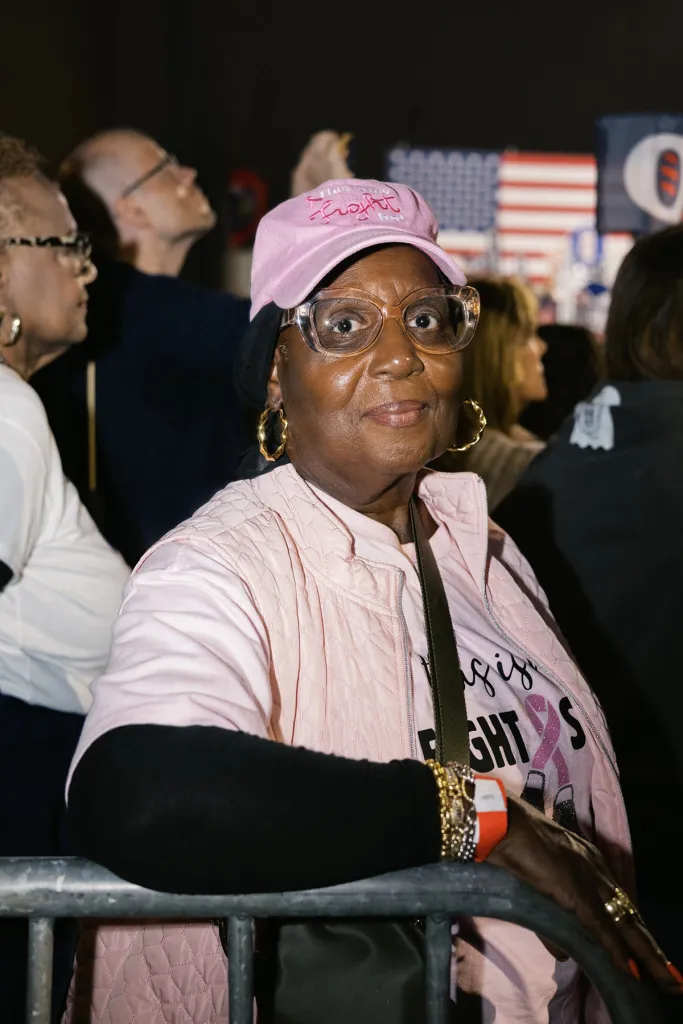
“It’s always on my mind because that’s a very difficult hurdle to overcome,” said Suzette Quarles, 69, who lives in Cobb County. “I’ve been through the closing of Black schools, the busing of Black students, the discounting of HBCUs, the sort of discrimination in terms of employment because of the color of your skin. So, as a child of the South, I’ve been through all of that.”
After Abrams’ second defeat, Quarles said, she wondered why Georgia “wasn’t ready.”
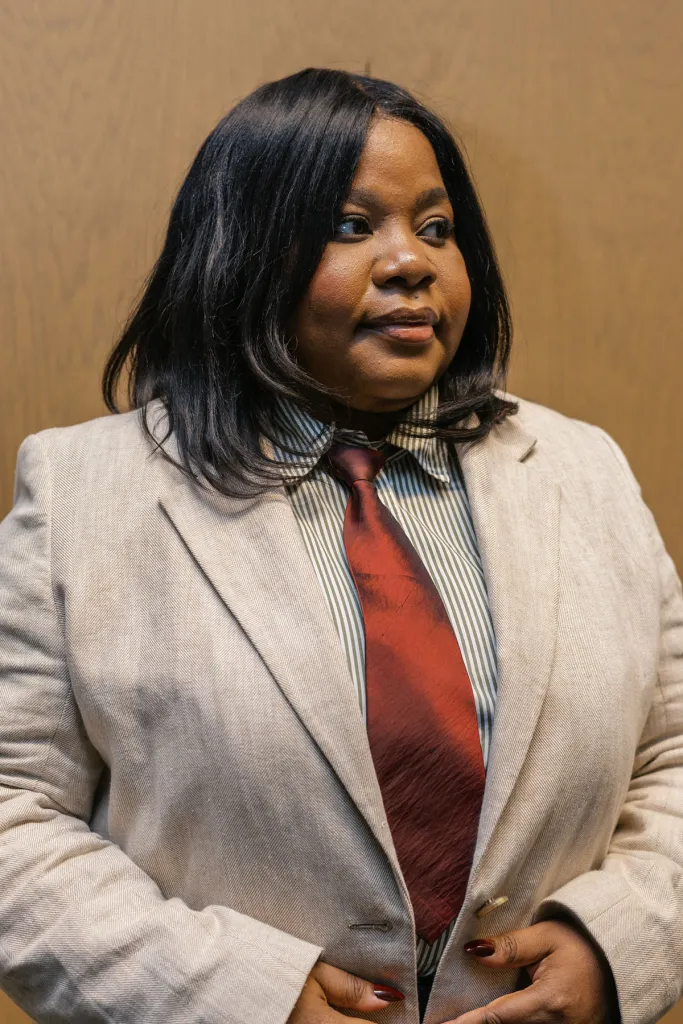
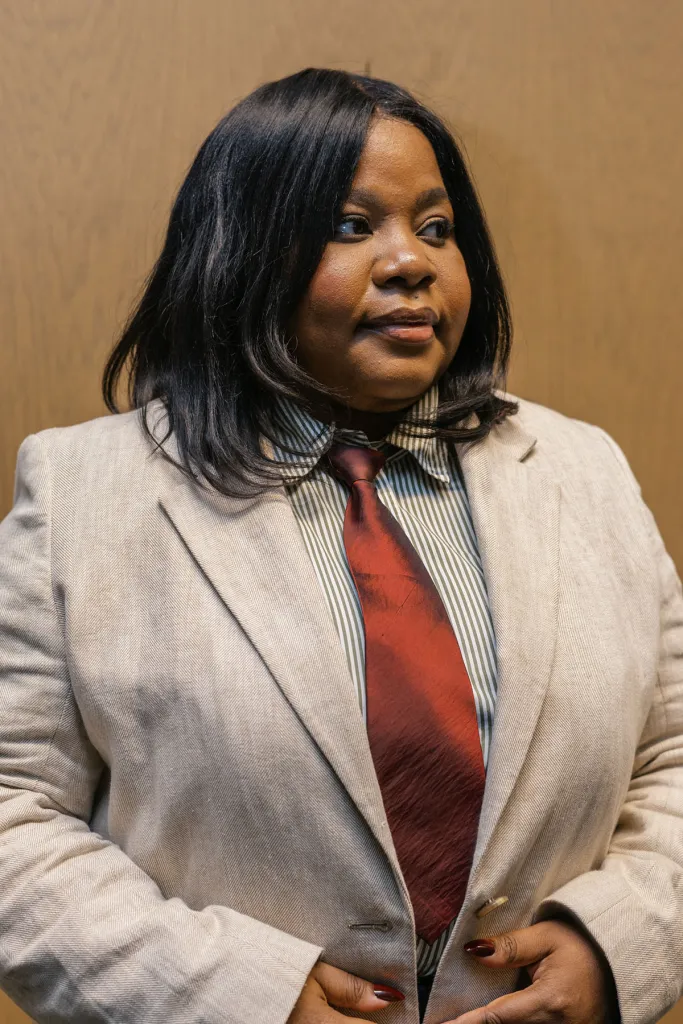
(Erin Fender for The 19th)
This time, Quarles said it may be different. “The economic conditions — some of the staunch, hard-nosed Republicans may actually see that the Republicans haven’t done anything here to improve the quality of life.”
Johnson said that when she thinks about Abrams’ defeats, the only words that come to mind are “racism and sexism.” But things could shift just enough this cycle. “I think that it’s somewhat different because now people are seeing what is happening in Washington, D.C.,” she said.
Naeshia McDowell, 35, said Bottoms’ history-making potential is “very much” on her mind. She said Bottoms is the most qualified candidate, and that her experience as Atlanta mayor showed that she’s someone “willing to admit when things went well and when things there are things you wish you could have improved on. … That’s who I want to see in the government.” She’s thinking of Abrams, whom she also believed was the most qualified candidate.
“The fact that these women continue to show up, despite being shown time after time that sometimes people are not ready for the changes that they’re offering, is admirable,” she said. “And so I’m glad they’re continuing to show up and continuing to push the needle.”