

What Pennsylvania’s measles outbreak could mean for pregnancy care across America
A deadly measles outbreak in Pennsylvania, which has infected more than 975 people this year and been linked to five deaths, has also infected at least 50 pregnant women in the state. Doctors in outbreak areas are making changes to how they care for pregnant patients and their babies, offering a glimpse of what may be in store across the nation as cases spread.
Among the deaths were two infants in Lancaster County, an area about 60 miles west of Philadelphia and the epicenter of the Pennsylvania outbreak. A newborn had congenital measles, which was passed in utero through an unvaccinated mother who was infected. It is not clear whether the other infant, who was reportedly 6 weeks old at the time of death and had a genetic birth disorder, was exposed in utero or after birth.
Some Pennsylvania-based doctors have experienced an uptick in anxious questions from patients about the implications of measles on just about all aspects of pregnancy care: What do more cases mean for a current pregnancy? Are additional precautions needed for someone planning to get pregnant soon? How concerned should parents with a newborn be about public outings?
It all depends, doctors in Pennsylvania and nationally told The 19th, on preventative care measures taken prior to pregnancy and a person’s proximity to an outbreak. What is certain is that new cases of congenital measles and increasing exposure risks are putting a spotlight on the vulnerabilities of pregnancy and postpartum care in America in an era of lowering vaccination rates.
“Air doesn’t know that there’s a border between Pennsylvania and Ohio, or that there’s a border between New Jersey and New York,” said Dr. Sharee Livingston, an OBGYN in Lancaster County. “We are dealing with a respiratory illness, and even if we weren’t dealing with a respiratory illness, none of us live in a vacuum.”
An evolving outbreak
Livingston never came across a single case of measles during her medical training in the mid-2000s, and neither did many of her peers.
But in the past six months, Livingston estimates that she has treated at least a dozen patients infected with the highly contagious disease. Livingston did not share more information about the patients, including whether they were all women or if any were pregnant.
The Pennsylvania Department of Health (DOH) told The 19th that, as of Friday, a total of 977 measles cases had been reported in 2026, and 53 of those were among pregnant women. As of early October state health officials have reported nearly 40 percent of Pennsylvania’s cases were coming from Lancaster County. The five measles-associated deaths — the infants, a 40-year-old woman, an 18-year-old and a 20-year-old with leukemia — were the first in the state in 35 years.
“Measles wasn’t a conversation we were having before, but it is now,” said Dr. Kisha Davis, president-elect of the American Academy of Family Physicians.
DOH told The 19th it could not confirm any estimate of the number of congenital measles cases in the state or provide more details about the infected pregnant women, citing state privacy laws. The department said there is no nationally standardized definition for congenital measles and that it is working with the Centers for Disease Control and Prevention to develop a system for tracking and reporting cases. They have been tracking cases during pregnancy and in “very young children” and said that since Oct. 2, more than 100 measles cases in the state have been in children under the age of 4. NBC News reported that at least six newborns in the state have been infected with measles during the outbreak, citing a Pennsylvania doctor.
There have been more than 3,800 confirmed measles cases in the United States this year, the highest number in decades. Roughly 95 percent of the infections are among unvaccinated people or individuals whose vaccination status is unknown. It is unclear how many of those people were pregnant or postpartum at the time of infection. But Dr. Kevin Ault, an OBGYN who recently started working at Penn State Health in Hershey — about 30 miles northwest of Lancaster County — noted that more than a quarter of cases were in adults of childbearing age.
“At any given time, about 1 percent of Americans are pregnant. So there’s an intersection there of unvaccinated adults and pregnant people that are going to be in this scenario,” said Ault, who is a fellow with the American College of Obstetricians and Gynecologists (ACOG) and serves in the organization’s expert group on infectious diseases and immunization.
Doctors do not recommend that pregnant patients get the measles-mumps-rubella (MMR) vaccine because it carries a live virus, making immunization prior to pregnancy critical. Vaccinated pregnant people pass antibodies to their infants and have an immune system that is better positioned to keep a future fetus and baby safe from measles or to reduce complications in the rare event of a breakthrough infection.
Livingston has been trying to reassure vaccinated patients who may still worry about infections, reminding them of these robust protections. But, she noted, “if the pregnant person believes that they’ve had an exposure and they’re unvaccinated, that’s where it becomes a problem. Because then there’s a risk to both the fetus and the mother.”
A ‘disconcerting’ reality
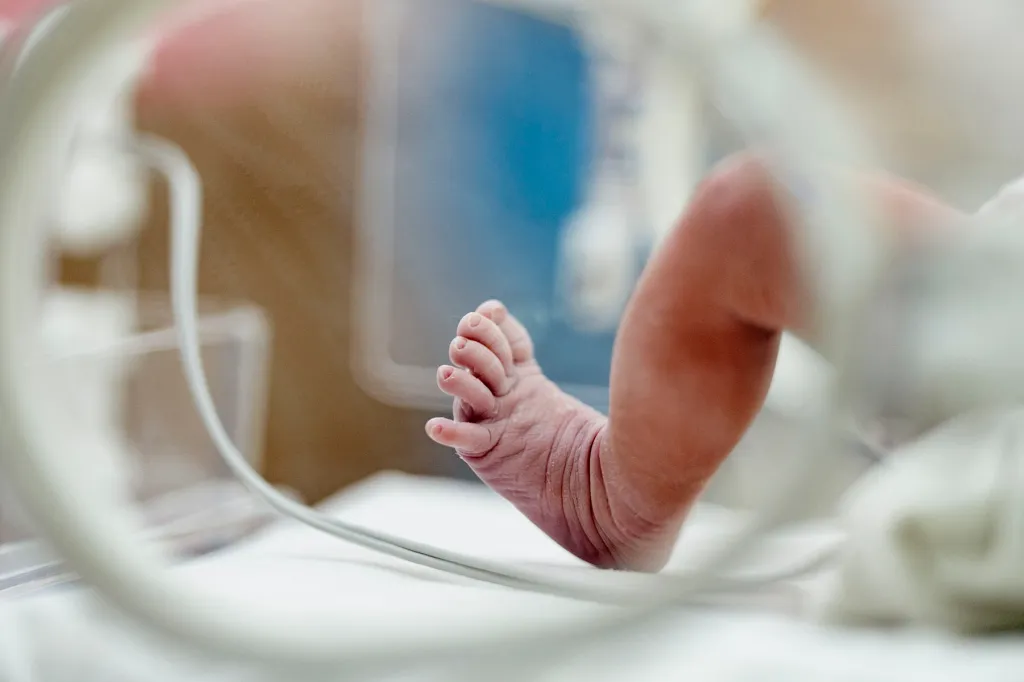
An infection in an unvaccinated person during pregnancy has a host of complications including pregnancy loss, premature delivery and low birth weight. New guidelines on congenital measles released last month by the American Academy of Pediatrics (AAP) warn of a 25 to 30 percent rate of infection if measles is passed through the birth parent within days of a birth. The guidelines had been in the works for some time but carried more urgency after the infant fatalities in Pennsylvania, said Dr. Pia Pannaraj, a member of the AAP’s Committee on Infectious Diseases and a professor of pediatrics at the University of California, San Diego.
“Many doctors that are practicing right now might never have seen measles in their lifetime, so they know it from the textbooks, but that’s not the same as having a patient,” she said. “So we’re having to educate providers: ‘How do you recognize measles? This is what the rash looks like.’”
The AAP guidelines break down different scenarios for monitoring congenital and newborn measles infections. In some cases, babies without overt symptoms of measles birthed by an infected parent can be given a post-exposure antibody known as immune globulin — but it may not help if infection has already occurred. Treatment in general for infected babies is limited and includes monitoring possible complications, like a fever or pneumonia.
“There’s only basically what we call supportive care,” Pannaraj said. “So we treat the symptoms as they arrive as best we can, but there’s no way to basically kill the measles virus, and there’s no way to prevent the complications that will occur.”
Infected babies can be at higher risk for encephalitis, a type of brain swelling, as well as a rare but fatal brain inflammation that can appear later in life.
“Mom takes the hit of getting the disease, but the infants are at the highest risk for measles complications of anybody that could get measles,” Pannaraj added, noting that babies’ immune systems are incredibly underdeveloped.
Dr. Holly Cummings, an OBGYN in Philadelphia and the chair of Pennsylvania’s section of ACOG, said she’s increasingly ordering bloodwork to check the measles immunity of patients who are thinking about getting pregnant.
This hasn’t always been Cummings’ approach. She already assesses her patients’ immunity for other viruses but relied on the general understanding that most people have received the MMR series, which is 97 percent effective at preventing measles. Several doctors told The 19th that they’ve worked under an assumption that children growing up in the 1990s and onward went through public schools that mandated the MMR vaccine. Those mandates are still in place, but exemption laws have been expanded since then.
ACOG, which has guidelines on measles that it developed more than a decade ago, recommends that doctors assess a patient’s immunity with either proof of vaccination or through bloodwork. For patients born in the ‘90s, electronic medical records of their childhood vaccinations may also be more readily available to doctors.
A measles immunity check before pregnancy may become a necessity in the future, but it will depend on circumstances like community spread and declining vaccination rates, Davis said.
“The vast majority of folks are still vaccinated — the fact that we are having to have that conversation again feels a little disconcerting,” she said.
These clinical considerations will carry more weight as more adults choose not to vaccinate their families, and as their children reach childbearing age. Vaccination rates for routine vaccines continue to decline among kindergartners, according to new CDC data. In Pennsylvania, more than half of counties have an MMR vaccination rate below 95 percent, the threshold for herd immunity. That includes Philadelphia County and some groups of children in Lancaster County.
While some of the most impacted areas in the state are far from Philadelphia, Cummings doesn’t want to make assumptions about her patients’ vaccine status. In September, public health officials reported a measles exposure at several locations within the Children’s Hospital of Philadelphia complex, including a NICU lounge.
“In the context of this current measles outbreak — and particularly for me right now given that there’s such a high number of cases in Pennsylvania — it does feel important for me to bring it up and ensure that my patients are protected,” she said.
Changing vaccine landscape
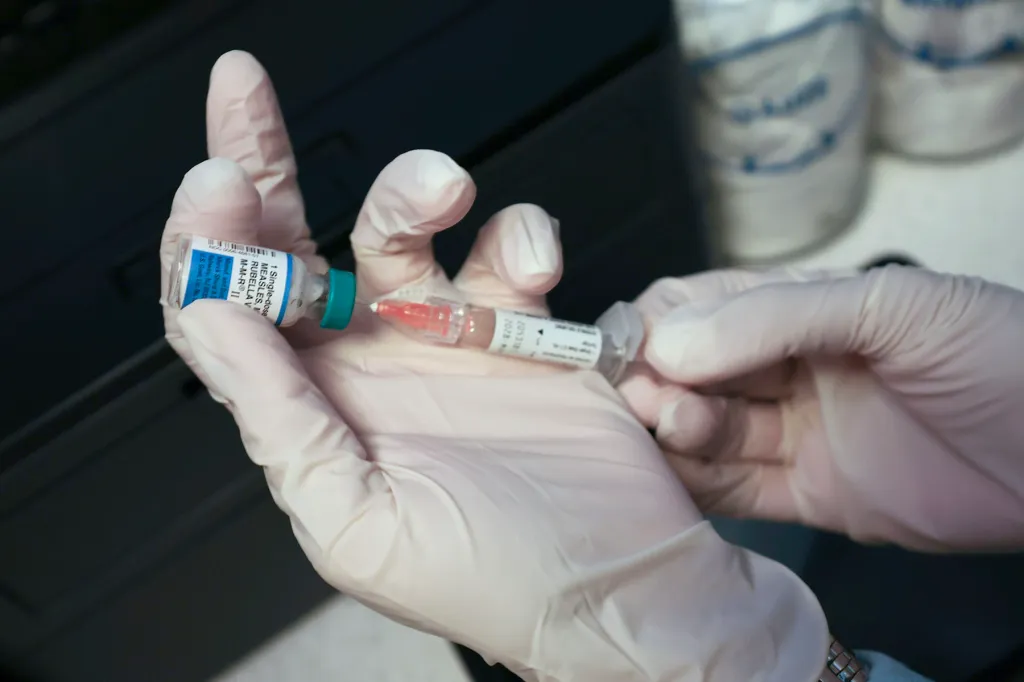
There are implications for future care beyond the frequency of immunity testing. Doctors may reexamine how they advise parents about early MMR vaccination for their babies.
Infants as young as six months old can be approved for an early MMR shot if they will be in an area with potential measles exposure. This option, Pannaraj said, used to be reserved for infants traveling internationally to high-risk exposure areas. But doctors are increasingly recommending an early shot if a child is living in or traveling domestically to an outbreak region. An early shot doesn’t negate the need for two shots later, which have been timed for maximum effectiveness.
“Is there going to be a time where we need to think about earlier vaccination?” she said. “Now, I hope that’s not the case, because currently the outbreaks are still limited within the United States. We’re all working hard to make sure it stays that way and to try to get rid of the outbreak.”
Emphasizing the importance of vaccination has been complicated in recent years. The politicization of pandemic-era mitigation policies gave rise to a new wave of online misinformation about the safety and efficacy of vaccines, including the MMR vaccine.
Disinformation over the disputed link between the MMR vaccine and autism flourished in the late ‘90s, but vaccine disinformation has a more powerful megaphone now through the federal government. Both President Donald Trump and Health and Human Services Secretary Robert F. Kennedy Jr. have spread false information about routine childhood vaccines. In August, Trump claimed without evidence that the MMR shot can be “quite lethal.” And while Kennedy’s department has occasionally promoted the MMR vaccine, he falsely said last year that the shot causes annual deaths. In 2021, Kennedy gave a speech in Lancaster County where he downplayed the threat of measles.
His record shapes public perception: New polling shows 40 percent of adults are unsure whether or not Kennedy recommends the MMR vaccine, and another 29 percent think he does not recommend it. Kennedy oversees the CDC, which has not recognized all five deaths reported in Pennsylvania. The department says on its measles dashboard that it is working to standardize a definition for measles deaths.
“These are not new efforts. What is new today is the fact that there’s been a corporatization of the anti-vaccine movement,” Chelsea Clinton, vice chair of the Clinton Foundation and assistant professor at Columbia University’s Mailman School of Public Health, told The 19th. “There are deep profit motives frequently fueling many of the loudest voices. I think some have deeply painful personal experiences and extrapolated out of those without scientific evidence or data and yet really believe they’re trying to save other families.”
Still, public health officials in Pennsylvania are seeing a response to the outbreak. In August, health providers reported administering more than 46,000 doses of the MMR vaccine — a massive jump from the roughly 25,000 doses they recorded monthly during the first half of the year.
Doctors say a person who is thinking about getting pregnant should get the MMR vaccine or check their immunity through bloodwork prior to conception. Someone who is pregnant and not vaccinated should consult with health providers about any special precautions to take to avoid an infection.
“We should be talking to women and to anyone whose partner may be thinking about being pregnant so that being caught up on your vaccines is just part of what someone is thinking about while also maybe trying to stop smoking, and drink more water, and eat healthier and all the other things that people often say they’re trying to optimize for their health before getting pregnant,” Clinton said.
Livingston credits state and federal public health officials for being responsive to the outbreak in her county, but she sees opportunities for more equitable care that helps people walk into pregnancy the healthiest version of themselves — which in turn can help to mitigate future adverse outcomes.
For now, Livingston is leaning on evidence-based best practices. She believes recent lessons from the pandemic around immunization will ultimately help her community move forward.
“I don’t mean to sound really flowery or overly positive, but I am hopeful,” she said. “I believe that most people want to be healthy during their pregnancies. They care tremendously about their unborn child, and so I think when people understand that that’s our angle, it makes it a little bit easier to have the conversation and maybe adopt best practices.”
Additional reporting by Isabela Espadas Barros Leal.