

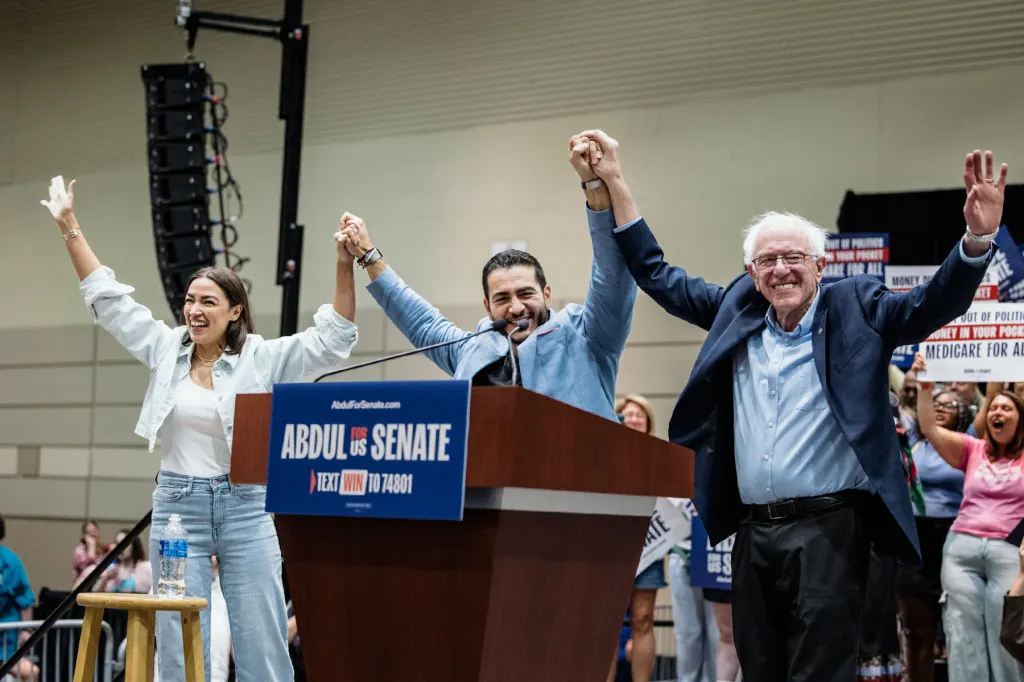
Abdul El-Sayed wins Michigan Senate primary shaped by party divisions, gender and faith
Abdul El-Sayed is Democrats’ pick for U.S. Senate in Michigan.
El-Sayed, a former public health official and progressive backed by Sen. Bernie Sanders, defeated Rep. Haley Stevens in Tuesday’s Democratic primary, Decision Desk HQ projects, capping a hotly contested race that drew national attention, as well as tens of millions in outside spending.
He’ll face former GOP Rep. Mike Rogers in November for the seat held by retiring Democratic Sen. Gary Peters. The seat is critical for Democrats to hold in November, more so if they hope to capture the Senate. The nonpartisan Cook Political Report rates the race as a tossup.
The contentious Democratic primary in a critical battleground state was widely seen as a testing ground for what direction the Democratic primary voters would take after the party’s loss to President Donald Trump, who narrowly won Michigan in 2024.
The race started out as a three-person contest that narrowed to two after state Sen. Mallory McMorrow dropped out of the race in July. Stevens and El-Sayed each represent markedly different visions and brands of politics.
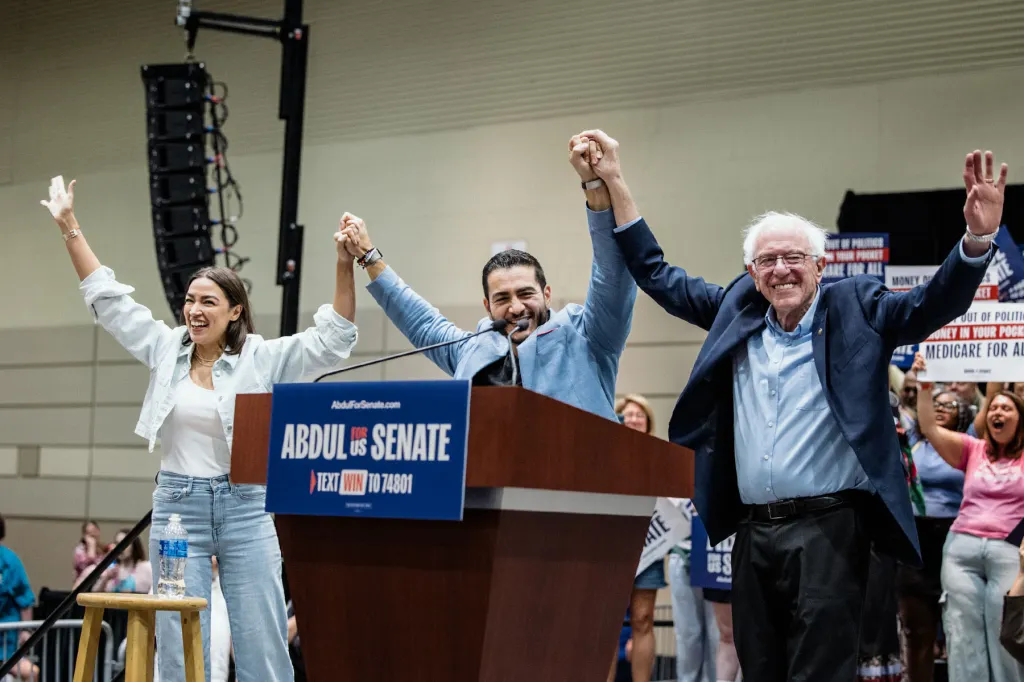
(Rosem Morton for The 19th)
El-Sayed, who ran for governor in 2018 and lost to current Gov. Gretchen Whitmer, launched his campaign for Senate on a three-part campaign slogan and rallying cry: “Get money out of politics, put money back in your pocket and pass Medicare for All.”
Stevens, who was chief of staff on the 2008 auto rescue before getting elected to Congress from a suburban Detroit House seat in 2018, positioned herself as a pragmatic and experienced policymaker. A self-described workhorse and “manufacturing geek,” Stevens argued she would be laser-focused on results, not polish. She was endorsed by high-profile Michigan Democrats including Peters, Gov. Gretchen Whitmer and former Sen. Debbie Stabenow.
But the Michigan primary came amid rising voters’ discontent and frustration with the existing Democratic Party establishment and strong opposition to the pro-Israel lobby and corporate spending, which has fueled a series of wins for progressives in contested U.S. House primaries this election cycle.
El-Sayed also made opposing Israel’s war in Gaza, and especially the pro-Israel lobby’s spending, central to his message in the race; the pro-Israel group AIPAC’s affiliated super PAC, United Democracy Project, spent over $10 million on ads boosting Stevens and attacking him.
Debates about electability, gender and racial bias were also at the forefront of the race. Stevens and many of her allies accused El-Sayed and his supporters of fueling sexist attacks and mockery of her, which El-Sayed denounced. Much of the closing message from Stevens and her allies argued she would be more electable in a purple state general election.
“Number one, when most people say I’m not electable, what they’re pointing at is my name among my faith in a state that elected Barack Obama twice,” El-Sayed, who would be the first Muslim U.S. senator, told The 19th.
“Electability is and has always been about the ability to inspire a movement of people to get people excited about their politics and to want to show up for it,” he added. “So I should hope that if we want to be elected, we should choose candidates who want to actually do something and can pose the contrast to Republicans.”