After years of waiting, she wanted to start gender-affirming care. Politics interfered.
Star Gates, a nonbinary transfeminine person in Ohio, realized something important a few months ago: She didn’t want to waste time pretending to be someone else.
Her realization was sparked by “I Saw the TV Glow,” a horror-fantasy movie directed by a nonbinary filmmaker that’s loaded with trans symbolism. For years, she’d known something was different about her gender and ignored it. But after watching the movie’s protagonist waste a lifetime by repressing who they are, Gates didn’t want that to be her.
Now 36, she wanted to start gender-affirming care.
So she went on Planned Parenthood’s website to find clinics near her Ohio town. This was her first step toward hormone replacement therapy, to taking estrogen and feeling more at ease in her body. Gates went to Planned Parenthood because she knew they would be supportive. But when she looked on the website, her heart sank.
The North Columbus Health Center, the clinic closest to her, couldn’t take Medicaid patients anymore. None of the others could either. Suddenly, her plans seemed impossible.
“I’m a pub cook. I don’t make a lot of money. And I can’t do insurance through my spouse — so Medicaid it is,” she said. “I just want a doctor to help guide me with a medical thing. How is it crazy to want that?”
Gates is one of many Americans who can no longer use their insurance at Planned Parenthood, the nation’s largest reproductive health care provider. That’s because last fall, Planned Parenthood was cut off from Medicaid by the federal government. So now Medicaid patients like Gates either have to find a way to pay for their care out of pocket or find somewhere else to get it, depending on where they live.
I just want a doctor to help guide me with a medical thing. How is it crazy to want that?”
Star Gates
This is a major setback for transgender health care. Planned Parenthood provides primary care and gender-affirming care to a lot of trans patients, especially in rural areas. But now, low-income trans adults have fewer options to start their transition at a time when accessing good health care is becoming even harder.
Gates, who uses they and she pronouns, lives about a 40-minute drive from Columbus. The nearest Planned Parenthood would require making that drive. And so would any other clinic providing gender-affirming care; there are no other options that she’s heard of in her town. The weight of navigating these logistics and facing a sudden roadblock is taking a toll.
“It’s all I can do to not break down and cry every time I think about it. This is already so freaking hard,” they said. “I’m tired, I’m angry, I’m upset, and that is a lot of stuff to jam down and try to keep held together while I go about my daily life.”
In Ohio, nearly 22,000 Planned Parenthood patients were affected when a federal appeals court allowed the federal government to kick the organization out of Medicaid. Although those patients can still access discounts and payment plans, they still have to pay out-of-pocket.
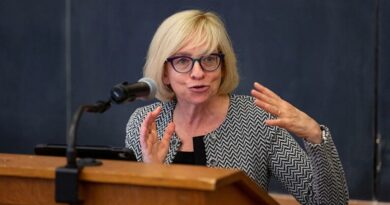
Erica Wilson-Domer, president and CEO of Planned Parenthood of Greater Ohio (PPGOH), said the organization has had to reduce workforce, including frontline staff, to make up for the lack of Medicaid funds. Ohio is also requiring PPGOH to pay back the state for services provided to Medicaid patients from July to September, when the federal appeals court ruling came in.
“The value of that was about $800,000, roughly,” she said. Under federal law, Medicaid already could not be used to pay for abortion — so it’s other health care that is being affected, Wilson-Domer said. According to the Columbus Dispatch, PPGOH provided care to over 50,000 patients in 2024. That includes more than 156,000 tests for sexually transmitted infections, more than 11,300 HIV tests, over 10,000 preventative care visits like cancer screenings, and 7,600 gender-affirming care visits.
The Athens Health Center in southeast Ohio, where the Appalachian mountains enter the state, is known for serving an especially high number of trans patients seeking gender-affirming care, Wilson-Domer said. In that area, it’s one of few options.
“We had a lot of trans patients telling us they were really struggling to find the appropriate drugs. They were struggling to find appropriate supplies. They were struggling to ask questions of pharmacies,” she said. “So we started a pharmacy.”
Planned Parenthood of Greater Ohio opened PPRX, a pharmacy in Akron, Ohio, about two years ago. That was the outcome of trans patients saying they needed better care — and not just gender-affirming care. They were struggling to access basic prescriptions.
“Presumably, if you’re on Medicaid, you’re already struggling financially,” she said. “But the goal of that pharmacy is to provide low-cost drugs to people who need them, regardless of whether you’re a patient of ours or not.”
LGBTQ+ adults are twice as likely as non-LGBTQ+ adults to use Medicaid as their main insurance, according to the Williams Institute. That puts them at a higher risk of losing health care when Medicaid is cut. And in Ohio, a lot of medical providers will not see Medicaid patients at all, due to low reimbursements from the state.
“They just continue to squeeze and squeeze and squeeze and make it harder for people to access health care,” Wilson-Domer said.
While Medicaid funds cannot go toward Planned Parenthood for one year, states can extend the ban, which Ohio officials and other states are trying to do.
They just continue to squeeze and squeeze and squeeze and make it harder for people to access health care.”
Erica Wilson-Domer
“Ohio is extra interesting, because abortion is lawful there,” said Katie Keith, director of the center for health policy and the law at the O’Neill Institute at Georgetown Law. Voters passed a ballot measure protecting abortion in 2023. “And yet the state is still working to keep Planned Parenthood out of the Medicaid program.”
Since Trump signed the federal ban into law last summer, 20 Planned Parenthood clinics have closed nationwide. If successful, state efforts to keep Medicaid funds out of Planned Parenthood more permanently will make health care deserts worse, Keith said. Cutting those funds means less maternal health care, fewer preventive screenings and less access to contraception — on top of restricting gender-affirming care, she said.
Planned Parenthood has dropped its lawsuit against the Trump administration after facing legal setbacks. While over 20 state attorneys general are also challenging the Medicaid cuts, their lawsuits have faced similar difficulties in court. Meanwhile, 11 Democrat-run states have allocated millions to Planned Parenthood clinics to maintain access for their Medicaid enrollees, per a KFF report. But in states like Ohio, Medicaid patients are on their own. And as many low-income Americans struggle to afford health care, trans people face extra challenges.
Going to the doctor has been hard for Gates. After too many bad experiences over the years, they avoided medical appointments altogether.
“Random doctors and dentists are nightmare fuel for me, and my spouse has had to hold my hand a few times,” they said. LGBTQ+ people are more likely to be refused care and discriminated against in doctor’s offices than straight people. While Gates doesn’t feel like they have faced discrimination from their doctors, they do feel ignored by them.
A few days ago, Gates had their first telehealth appointment with a new therapist. She originally sought therapy for depression, but now she’s also seeking advice about navigating her gender transition. Luckily, her therapist is a queer woman, so Gates feels supported. She plans to hold off on gender-affirming care until she can meet with her therapist a few more times, so they can make a plan together.
And in the meantime, Gates said, she’s not giving up.