
For families of medically fragile children, a policy change threatens the care they need at home
The Department of Justice asked a federal appeals court earlier this month to vacate its March decision in a longrunning case about requiring medically fragile children in Florida to receive the care they need while living at home with their families. The news came as a massive blow to parents who had hoped the state would be forced to provide better support for their children.
The move comes two months after the Department of Justice’s Office of Legal Counsel released a memo declaring that it would no longer enforce a landmark U.S. Supreme Court case, Olmstead v. LC, which in 1999 established that people with disabilities have a right to live in ordinary communities rather than institutional settings like nursing homes or asylums. LC, better known to her friends as Lois Curtis, and her co-plaintiff, Elaine Wilson, got to move into an apartment instead of continuing to live in a Georgia state hospital. The women’s case changed the legal landscape for Americans with disabilities and their families.
In a June memo, the DOJ declared Olmstead unenforceable and said that states have no requirement to provide home and community care. The memo primarily references people with severe mental illness, but applies to all disabilities, and establishes a new direction for the legal treatment of Americans with disabilities.
The department did not respond to The 19th’s request for comment or to specific questions about why one of its first acts since the memo involves medically fragile children.
Parents involved in the Florida case before the 11th U.S. Circuit Court of Appeals, like Kayla Webb, had hoped that the state would be required to provide enough care for their children to live out the rest of their lives at home.
“We have been struggling from the moment we adopted him to get the services he needs and to keep them in place to be able to keep him home and keep him safe,” Webb told The 19th about her son, Dylan.
Webb, 37, lives in Winter Haven, Florida, with her husband and six children. Three of their children, including Dylan, are adopted. When they adopted him, Dylan was already receiving hospice care for a heart condition that cannot be fully repaired, cyclical vomiting syndrome and a developmental disability. He is fed through a tube directly into his stomach and requires care 24 hours a day.
Last year, Webb was informed that Dylan would receive coverage for less than half that time. What that means, in practice, is that Webb has had to choose between sending her child to school, where he needs to be accompanied by a medical professional for safety reasons, or eating, since his tube feeding needs to be continuously monitored overnight to prevent him from choking or vomiting. She can’t stay up all night, every night to monitor his feeding because she has five other children to care for and needs to be alert to keep Dylan safe.
“How does a parent make that choice?” Webb asked.
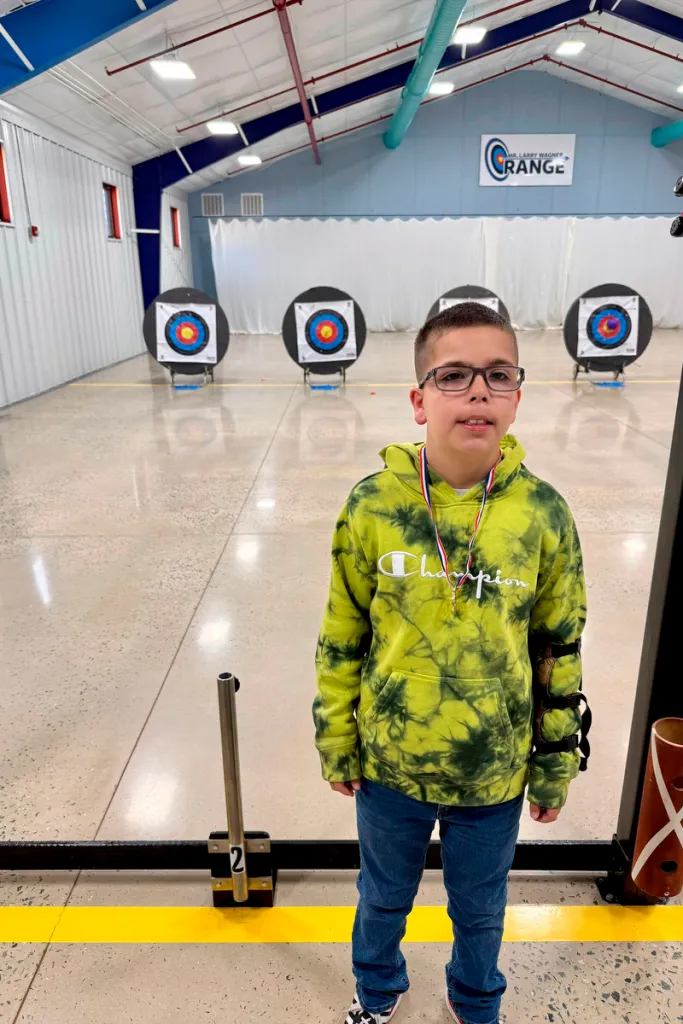
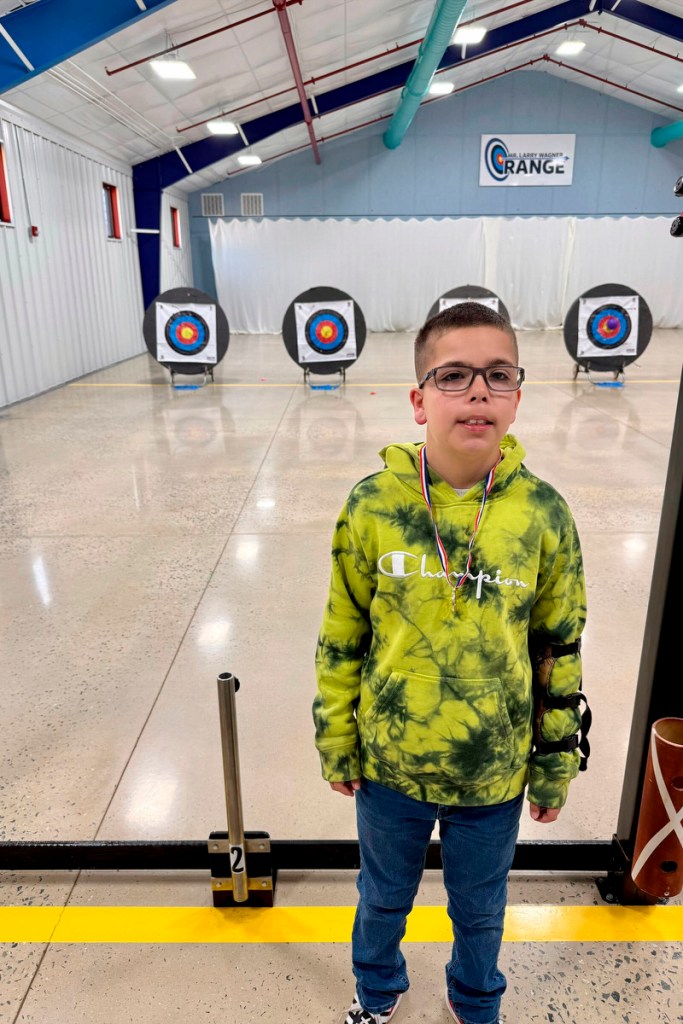
(Kayla Webb)
For many people with disabilities and their families, landing in a nursing home or similar facility is a worst-case scenario. But for Webb’s family, and families like hers, a nursing home isn’t even an option because her son’s care is so complex. Facilities won’t accept him or children like him.
“We have worked so hard to keep him alive, and here we are talking about potentially having to put him into a facility, but there is no facility to keep him alive and safe,” Webb said. “As a parent, I should have never been put in the place where I needed to find or try to find a facility to put my son. And we can’t even do that. We’re stuck.”
The DOJ has historically played a key role in enforcing the rights of people with disabilities. Reagan Rush worked for the DOJ from 2010 until 2025, a period that included the Obama, Trump and Biden administrations. Her focus was Olmstead enforcement.
“The Department of Justice has been enforcing this obligation against state and local governments,” said Rush, who left during a mass exodus of longtime DOJ staff when President Donald Trump returned to office. “As of the time that I left, the department had about two dozen or so cases open in various stages. It’s fundamentally about whether or not people with disabilities can live, work, go to school and make all the decisions about how you spend your day and you spend your life that people without disabilities make.”
Rush emphasized that the DOJ’s decision to abandon Olmstead enforcement does not impact what the Americans with Disabilities Act (ADA) covers or what the Olmstead decision determined. Olmstead-based cases are complex and expensive, and the primary mechanism of enforcement has been federal action.
She noted that it doesn’t really matter what the law or Supreme Court says if the federal government won’t intervene on behalf of people with disabilities to prosecute Olmstead cases.
“If you have a right, it means nothing if it’s not enforced,” she said.
Matthew Dietz is a disability rights lawyer who helped bring a separate class-action lawsuit on behalf of families with medically fragile children in 2012. The DOJ brought its own enforcement suit a year later on behalf of hundreds of medically fragile children after a federal investigation found that Florida was not meeting its obligation to provide in-home care, a standard set by Olmstead.
Dietz told The 19th that he is deeply concerned about what a lack of Olmstead enforcement will mean in practice.
“If the United States is not going to enforce the requirements of Olmstead, it’s going to go back to the states,” Dietz said. “Families will have to rely on the states to do things that are right.” That is not, in his understanding and the understanding of his clients, what the state of Florida is doing.
Yasmina Halim, 44, lives in Port Richey, Florida. Her daughter, Lily, is 13 and has a degenerative neurological condition called Tay-Sachs disease. She can no longer speak, walk, eat or drink.
“She was a normal little girl. She went to school. She did ballet. She was just a really happy, bubbly girl,” Halim said.
Halim is a single mother of two. Her marriage fell apart shortly after her daughter’s diagnosis. She cares for Lily full-time, as she has struggled to find paid staff to care for her daughter.
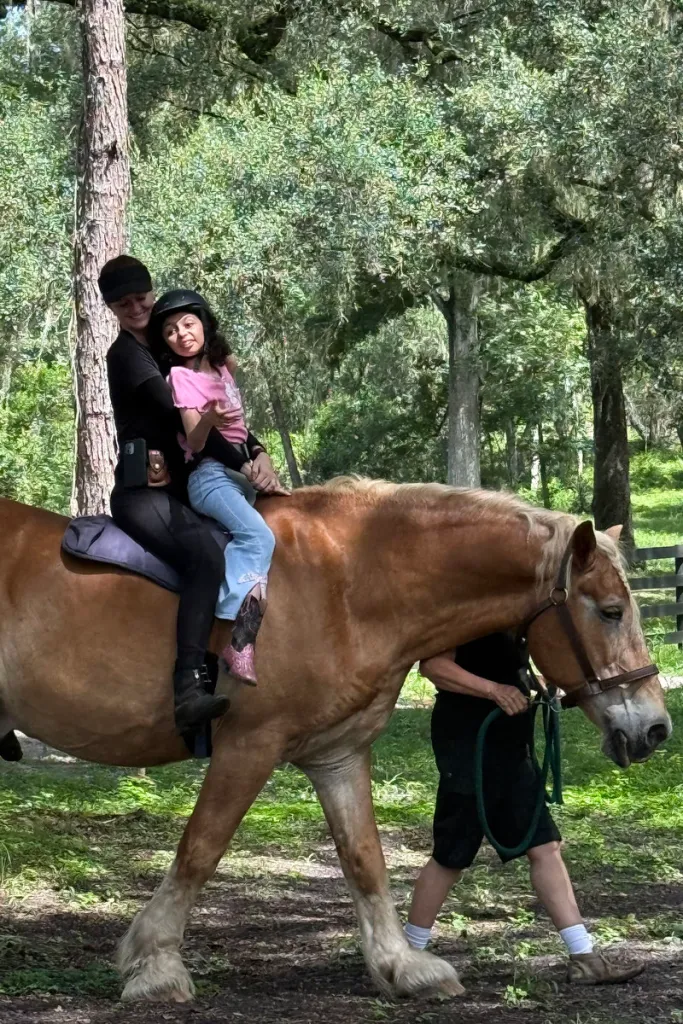
(Yasmina Halim)
“I’m trying to navigate this system,” she said. “We were never fully stocked with nursing. I would go months at a time without even being able to get a nurse.”
Halim tried to find a facility that would take Lily, since she wasn’t able to get in-home care. She wanted her daughter to stay home with her, but more than that, she wanted Lily to be alive and safe. But no nursing home or other facility would take her.
“There really isn’t a facility that could take such a young child and meet all her medical demands,” Halim said.
Halim cares for her daughter full-time through the state’s self-directed care program. She is paid $15 an hour for 40 hours a week. But Halim works many, many more hours than that. She is frustrated by the suggestion from some in the Trump administration that such programs are somehow fraudulent or wasteful. Without it, Halim would have to go back to more traditional employment and there would be no one to care for her daughter.
She is worried about the administration’s move against enforcing Olmstead, which has been one of the primary forces behind programs like the one she relies on to be paid to care for her daughter as a single parent.
“I thought the whole campaign and everything was about, you know, leaving things in control of families and not the government,” Halim said of President Trump’s messaging, as well as the messaging of other Republican politicians like Florida governor Ron DeSantis, who has made “parental rights” a priority during his time in office. “This is taking away our right to give our children dignified lives. These medically frail children deserve to live dignified lives. They deserve to die with their families around them.”