

How do you figure out if microplastics are affecting pregnancy?
This story was originally published by Science Friday, with the assistance of the Journalism & Women Symposium (JAWS) Health Journalism Fellowship, supported by The Commonwealth Fund.
Toxicologist Sam Adams was thrilled to find out she was pregnant in the summer of 2025. Like many first-time parents, she had a long list of things to do to prepare for the baby. But she also needed to make big changes at her job: she stopped running experiments in the lab, and got all of the spaces she worked in assessed for air quality.
That’s because Adams studies how particulate matter—solid particles in air pollution—affects people during pregnancy. One of those particles is microplastics.
Microplastics vary in size, from visible to the human eye at 5 millimeters, down to a nanometer. Nanoplastics are even smaller. In the research community, they’re collectively known as MNPs, micro- and nanoplastics.
MNPs have been documented in human brains, hearts, and reproductive organs. They’ve been found circulating in our blood stream. In petri dish studies of human cells, they’ve been tied to inflammation, oxidative stress, and even carcinogenic effects.
“This is scary work to do whether or not you’re pregnant,” Adams says of working in an air pollution lab. “But I also knew that I wanted to have a baby, and we were going to figure out a way to do both at the same time.”
Her baby, Joey, was born in April. And while she takes precautions to limit microplastic exposure at home, like using HEPA air filters, some things are unavoidable. She’s had to rely on bottled water for herself and Joey because of concerns about the tap water in her Newark, New Jersey condo.
We rely on plastic for many things in our daily lives. And while it’s valued for its sterility and flexibility, its utility is also its curse. Plastics are meant to be resilient. So when a product’s useful life is over, the longer journey begins. A discarded bottle or container may start a new life as part of the 5% of plastic that gets recycled in the U.S. But most likely, it’ll be incinerated, put in a landfill, or simply left to disintegrate.
It can take decades for plastic to break down, and along the way it may be beaten to bits by ocean waves, scorched by UV radiation, or crushed by tires on a highway. The resulting bits of plastic have been documented just about everywhere in our environment, from waterways to remote mountaintops to the air itself.
And we’re starting to understand how MNPs end up in our bodies. They may be ingested through the food we eat—studies have found that crops can absorb plastic particles in the soil through their roots, and ultraprocessed foods can take on high concentrations of MNPs from manufacturing and packaging. We may also be breathing plastic particles in through our noses, sending them into our circulatory system and organs.
But even as evidence of microplastics in our bodies mounts, it’s not clear how they affect our health. And in this small, nascent field of science, just a handful of people are dedicated to uncovering how plastic particles affect one of the most sensitive and emotional parts of life: pregnancy and fetal development.
Plastic in the placenta
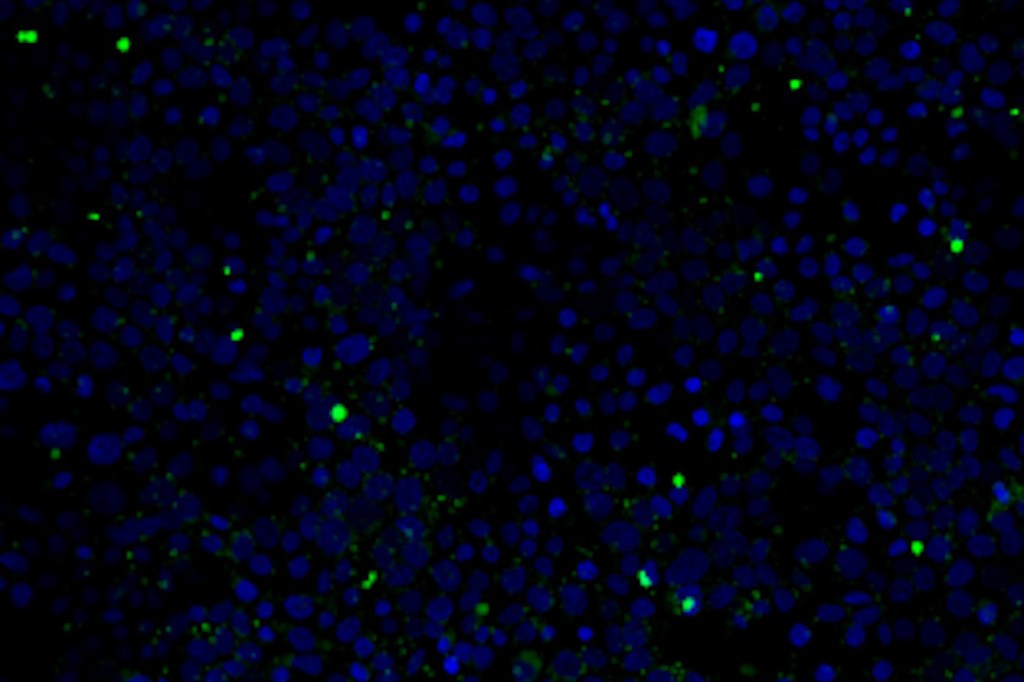
At the Baylor College of Medicine in Houston, Dr. Enrico Barrozo has been studying MNPs in the placenta. A specialist in preterm environmental exposures, he worked on a widely circulated 2024 study analyzing 62 human placentas post-birth. Microplastics were found in every single sample.
The placenta provides a unique window into how the body processes contaminants because it’s grown with the specific purpose of keeping a fetus alive, and can be studied in full after birth without harm to the person who grew it.
“It’s essentially the maternal and fetal interface,” Barrozo says. “People often compare it to a filter between the baby and the mom.”
Barrozo is investigating possible links between the MNPs in placentas and certain pregnancy outcomes, like premature birth. Data from his and other labs have shown placentas from babies born prematurely to have higher plastic concentrations than placentas from full-term births.
Plastic particles have also been found in testes, follicular fluid, breast milk, and even meconium, the first bowel movement of a fetus or newborn. Still, Barrozo cautions that more data are needed to know if these MNPs are harming fetuses in any way.
“The question we always get is whether or not they actually make it to the baby,” he says. “There have been a lot of alarmist, sensationalist headlines about this. I do try to stay on the side of caution.”
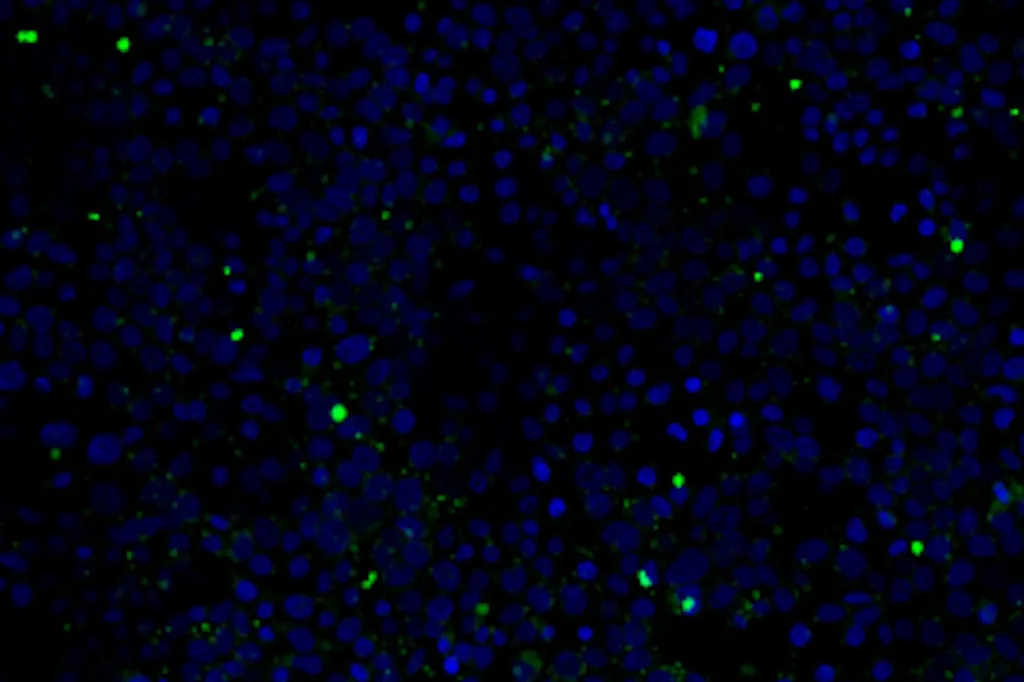
(Barrozo Lab)
While studying human tissue samples can tell us where micro- and nanoplastics are located, it can’t tell us much about how they travel within the body. Understanding that mechanism is the focus of Dr. Phoebe Stapleton at Rutgers University in New Jersey. She runs the lab where Sam Adams is a graduate student.
Stapleton didn’t set out to study plastics. A toxicologist, her background is in how air pollution affects cardiovascular function. When she arrived as an associate professor at Rutgers, she became interested in if—and how—inhaled plastic particles cross the placenta, from mom to baby.
In the fall of 2020, she was studying polystyrene, a common polymer used to make plastic cutlery and styrofoam. Her team found that in rats, inhaled polystyrene nanoplastics cross the placental barrier that separates maternal and fetal blood. That means the placenta’s key function, keeping pollutants from reaching the fetus, wasn’t holding up when it came to plastic. That discovery felt like taking a blindfold off, she says.
“After that, your work kind of changes,” Stapleton says. “And you realize just how much plastic exposure people are having, just how much we’re surrounded by it.”
Stapleton’s lab is now focused on identifying how plastic particles may be affecting pregnancy and lactation. One area she’s looking at is glucose metabolism, which is important for hormone regulation and weight management. Glucose is also necessary for fetal growth. Stapleton’s lab has found that rats exposed to high levels of microplastics have smaller pups. Her colleagues have theorized that MNPs could stress the placenta and cause it to keep more glucose to itself, which could restrict the growth of the fetus, but early research is inconclusive.
Using rats to study human health is not a one-to-one comparison, but it’s pretty close, Stapleton says. And for now, it’s the best model for experimentation. A major issue for studying microplastics in humans is that the scientific process is upended. Nobody wants to volunteer to be dosed with high levels of microplastics for science. And, if microplastics really are inside all of us, there’s no control group.
The same is true when it comes to PFAS “forever chemicals,” which can persist in nature indefinitely. They’re present in a wide range of products, including plastic packaging, and are estimated to be present in the blood of nearly all Americans. Unlike microplastics, there’s a large body of research that ties PFAS to negative health effects, including increased risk of cancer, hormonal interference, and decreased fertility.
While PFAS chemicals can be present in plastics, there’s not substantial proof that they’re leaching from microplastics into human tissues.
Stapleton says it might take generations before we see wider health effects of microplastics playing out outside the lab.
“In my mind, we’re at this moment because we haven’t hit the dose yet that’s going to lead to those health effect outcomes,” she says.
Spotting plastic among the plastic
The field of micro- and nanoplastics in human tissues is “a very, very small scientific world,” Stapleton says. And it’s only about 10 years old.
By nature of the field being so new and specific, a major challenge is that methods for detecting plastic aren’t standardized. In some labs, researchers shine a wide wavelength light on a tissue sample, and check the wavelengths reflected back for “fingerprints” of the materials present. A nylon particle, for example, will reflect that light very differently than a red blood cell.
Other labs use a series of chemical washes to break down a biological sample until just plastic remains. That plastic is then blasted at 600 degrees C, and the gaseous signatures it gives off are analyzed to figure out which polymers are present.
But each method has limitations. The first is good at detecting what’s in a sample, but not how much. The second has a possibility for data interference, as some plastics have a similar chemical makeup as the lipids in our bodies.
Another, more concerning issue in the field is contamination. Research labs are inherently filled with plastic: It’s standard practice to store samples in plastic containers, to use plastic pipette tips, and to wear lab coats and protective gear made with polyester. Regular wear and tear causes micro- and nanoplastics to flake off, a process accelerated when heat, knives, and washing are involved.
A recent study found that flakes shedding from nitrile and latex gloves alone could lead to 2,000 false positives per millimeter squared in a test sample.
Every MNP researcher interviewed for this story acknowledged that contamination is a big concern, and labs have had to take a critical look at every step of the research process. They’re replacing plastic with glass and stainless steel, and using lab coats made with natural fibers.
Enrico Barrozo at Baylor says contamination and analytical interference are real challenges in the field, but pushes back on criticism that human microplastics studies are invalid.
“No serious group working in human tissues would dispute these concerns,” Barrozo says. “The problem is the leap from a valid analytical concern to a broad dismissal of human tissue measurements or clinical association studies.”
Some micro- and nanoplastic researchers are on a quest to fully remove plastic from their lab work. But that’s a Sisyphean task, because plastic is present in the least obvious places. It’s used as a filler in lab rat bedding, it’s in paint on the walls, and even in mascara a researcher may wear into the lab. Many labs are moving forward by measuring background levels of microplastic contamination—what kinds of MNPs are already present, and to what degree—and accounting for that in research results.
In April, a federal announcement set the microplastics field abuzz. Health Secretary Robert F. Kennedy Jr. and EPA Administrator Lee Zeldin announced STOMP, Systematic Targeting of Microplastics. The program, through a research agency called ARPA-H, has three goals: to measure, target, and eventually remove microplastics from the human body.
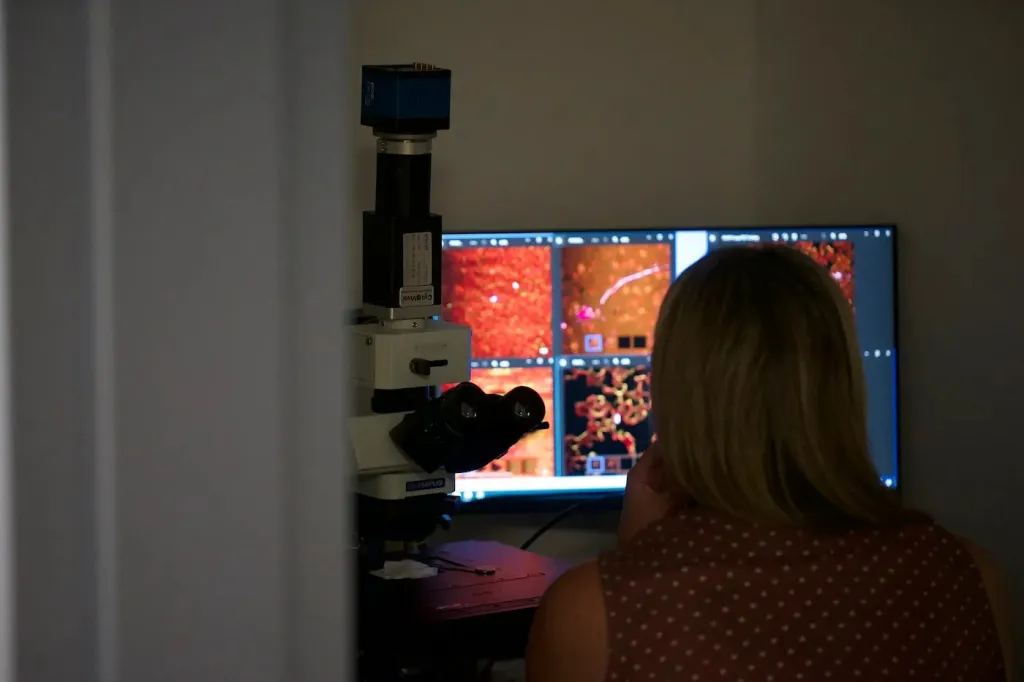
(Kathleen Davis)
Over the next five years, STOMP will fund specially chosen teams of micro- and nanoplastic researchers to unlock these big questions, starting with accurate measurement. These teams will work under tight deadlines and high expectations, with frequent check-ins to share their research progress.
Many MNP researchers, including Barrozo and Stapleton, were present for the announcement. They spent the following weeks scrambling to submit their research proposals.
Dr. Ileana Hancu, program manager for STOMP, says the nascency of the microplastics field and the small amount of scientific literature on the topic makes it an especially enticing candidate for an ARPA-H initiative.
“ For most everything else that you do, it takes you a year to just understand where the field is,” Hancu says. But that’s not the case for MNPs. “You spend two to four weeks and you basically read everything there is.”
Another researcher eager for the opportunity to work with STOMP is Dr. Marcus Garcia, a postdoc at the University of New Mexico College of Pharmacy, and first author on the buzzy human placenta study from 2024.
“ I’m glad that the science is finally getting the attention that it needs,” Garcia says. “And it’s attention from policymakers and government entities to really see the importance of why we’re doing this research, why we want to push that forward.”
Stapleton says a best-case scenario would be if STOMP led to federal limits for the environmental pollution of micro- and nanoplastics. But excitement about STOMP sits alongside another reality: The Trump administration is cozy with the petrochemical industry, and limits on virgin plastic production are unlikely.
Our plastic future
Last November, on the way to a meeting in Texas, Phoebe Stapleton was one of 16 people on a puddle jumper. To help balance the tiny aircraft, she was asked to sit next to another passenger, a petrochemical research scientist for a major petroleum company. For the next hour and a half, they had a cordial but awkward conversation about their fundamentally opposed professions. His pushback followed familiar lines: Was she confident that nanoplastics were real, and did she really think there were human health effects?
“I haven’t heard anyone want more of them in their brain, or in their testicles, or be excited that they’re found in their unborn baby’s space,” Stapleton says. “So while I respect the idea that we don’t necessarily have a direct linchpin to these human health effects, I haven’t found anyone who thinks it’s a good idea or wants more of them.”
She believes it’s a matter of time before the petrochemical industry starts pushing back directly on the work of her lab and others. Despite growing public concern about microplastics, global plastic production is expected to nearly triple by 2060.
In MNP research labs, animals are often exposed to particle loads far greater than what a human would normally be exposed to in the environment—10 milligrams per cubic meter in Stapleton’s lab. While such high exposures will ideally lead to faster answers about health effects, Stapleton says it’s also possible that this load will be more akin to what future humans will be exposed to.
“Particle exposure is increasing exponentially,” she says. “I like that it’s not relevant today, because maybe it’s providing a glimpse into our future.”

(Kathleen Davis for Science Friday)
Marcus Garcia, at the University of New Mexico, is particularly concerned about how that increasing exposure is linked to socioeconomic factors.
“I come from a background where I’ve had less means, and I know what it’s like to eat meals that are excessively processed,” Garcia says. “[This] has helped me think about the factors behind plastics accumulation, especially with the understanding that we’re seeing higher instances of plastics coming from our food sources.”
On her desk, Stapleton has a piece of paper printed with a familiar saying: “Grant me the serenity to accept the things I cannot change, the courage to change the things I can, and the wisdom to know the difference.” It’s an apt mantra for someone who has dedicated their career to researching a pervasive contaminant with no known solution.
“I’m deep enough in to understand that there are exposures everywhere,” Stapleton says. “If I got caught up in the concern about the lid on take-out coffee I got earlier, then I would just get caught in that never-ending loop.”
There are changes that MNP researchers have made in their own lives: avoiding plastic food containers, and never putting them in the microwave. Throwing out plastic cutting boards and cutlery. But there’s only so much individuals can do to minimize risk.
Across the board, the experts interviewed for this story acknowledged that it’s easy for expectant parents to fixate on the risks environmental contaminants may bring to pregnancy. But they agreed that with our current level of knowledge, it’s not worth stressing about the potential harms of microplastics. Especially, as Stapleton points out, because stress and anxiety have their own negative effects on fetal development and maternal health.
“We don’t necessarily know what plastic exposure might lead to yet,” she says. “If we got caught up in all of those what-ifs, then we’d stop moving forward. And I really want to be able to continue moving forward.”