
From rural Virginia music teacher to the nation’s top teachers union leader
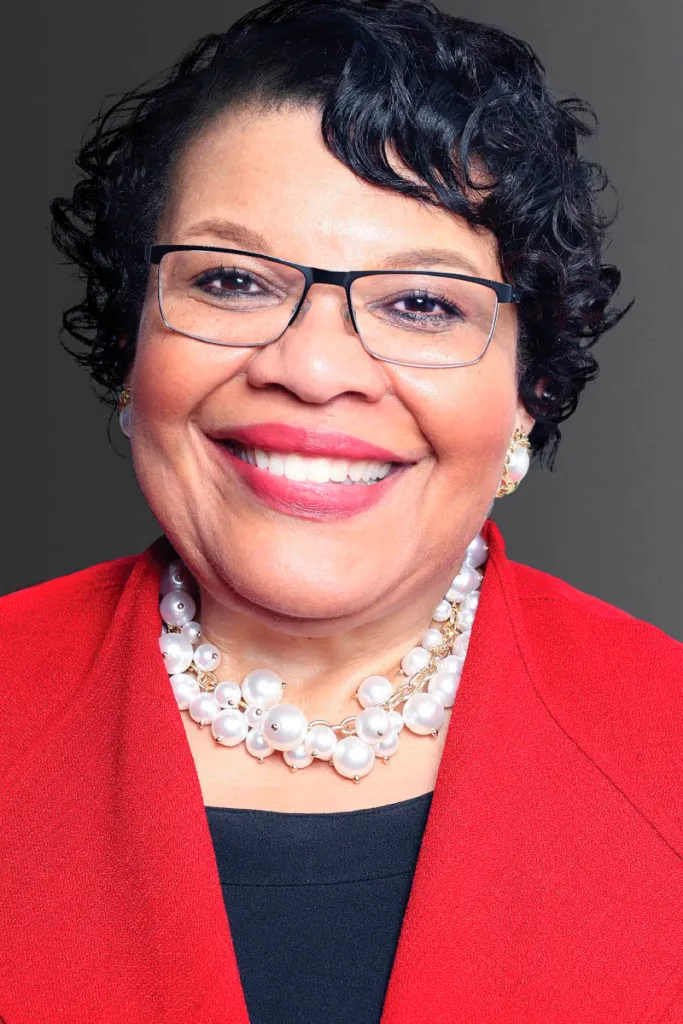
Princess Moss couldn’t help but to cry as she discussed her journey from growing up in rural Virginia to leading the nation’s largest labor union — the National Education Association (NEA).
“There were so many emotions running through me,” Moss recalled of the moment she won the four-person race on July 5 during the NEA’s 105th Representative Assembly in Denver. “It was an honor to be elected as someone who came up through the ranks as an elementary music teacher into the union.”
She will preside over the NEA during a time when public education faces fierce attacks. The Department of Education has been largely gutted, a new federal school choice program threatens to divert resources from public schools, and curriculum restrictions in a number of states limit what educators can discuss in class.
But Moss campaigned for the NEA presidency with a call to look beyond the challenges public education is up against. She titles her vision “From Resistance to Renaissance.”
“What that means is that we move from defending what was to building what should be,” she explained. “The question we ask is, ‘What do we build that’s better?’ Defense is important, but here’s an opportunity to build a system that’s designed to ensure that every student is successful.”
Moss contends that educators have been on the defensive for too long when it comes to their advocacy for funding, civil rights and the very existence of public education. It is time to go on the offense, she stressed throughout her campaign.
For more than two decades, Moss taught music in Louisa County, Virginia. She then moved through the ranks of union leadership, serving as president of the Virginia Education Association from 2005 to 2008. After that, she took on national roles, including NEA secretary-treasurer, before rising to vice president in 2020. Moss takes office on September 1 as the successor to Becky Pringle, who will have completed the maximum two terms she can serve as president.
“Princess Moss carries the spirit of every classroom, every union hall, and every kid who needed someone to fight for them,” Pringle told The 19th in a statement. “She has been a music teacher, a local, state, and national leader — and now she stands where educators across this country need her to stand. NEA is in the capable hands of someone who has done the work on behalf of students and educators, not just talked about it.”
Moss, 65, will be the fourth black woman to head the organization since its launch in 1857. She still remembers being a second-grader at her elementary school in newly integrated Spotsylvania County, Virginia, in 1968. Competing to be the class spelling bee champion, she misspelled the word “refrigerator.” But her teacher, Lucy T. Lewis, comforted her in a way that has lingered with her throughout her career.
“I wanted to grow up and be a teacher just like Mrs. Lewis, as someone who could teach, but also make you feel like you were the smartest person in the world, even when you didn’t get it all right,” Moss said.
Now, more than five decades later, as she prepares to head the NEA — which represents about 2.8 million educators and education support professionals — Moss wants to encourage the union’s membership in the same way Lewis comforted her.
“I’ll be out with our members over the next few months, hearing what they have to say, getting their insights, hearing what’s important to them, and what they want their national union to be able to voice on their behalf,” she said.
When asked if she feels at all anxious about presiding over the NEA in a divisive political climate that has seen attacks on public education and labor unions alike, Moss spoke candidly: “Of course, you have anxiety.” But, she added, there is also reason to hope.
“What gives me hope is that I know that educators are doing all that they can do to ensure that their students have the best possible education,” she said. “I have hope that we will come out of those attacks with flying colors because we’re doing the work for the right reasons.”
Having grown up in Bumpass, Virginia, an unincorporated community of 9,800 people where the nearest grocery store was a half-hour away, Moss brings a direct understanding of rural education challenges to the national stage. She recognizes the persistent digital divide, school closures and dearth of resources that impact rural students and families.
“I know what it means to the kids to be able to come together in the public school,” she said. “We have to ensure that our students in rural communities are receiving equitable resources, so that they have access to the quality public education they deserve.”
She is equally passionate about honoring education support professionals — bus drivers, cafeteria workers, paraeducators, maintenance staff.
“All of us play a very important part in making the school run. We’re a family,” Moss said. “Our education support professionals play an extremely important role in ensuring that the school runs. It takes all of us.”
Her parents were among these professionals; both drove school buses for Spotsylvania County Public Schools in Virginia. While her mother was a high school graduate, her father did not complete school beyond the eighth grade. They desired for their three children to have better lives.
“My parents knew that public education was the great equalizer,” Moss said. “They instilled in us the importance of getting a good public education.”
Music education played a particularly important role in Moss’ early years. In fifth grade, she fell in love with the clarinet, but her family couldn’t afford to buy her an instrument right away. She had to wait a year before joining the middle school band, she recalled through tears.
“I just loved it,” she said. “It gave me confidence. Just carrying that musical instrument on the school bus, it made me feel like somebody.”
In high school, another woodwind instrument captivated her — the bassoon. She earned a music degree from the University of Mary Washington (then Mary Washington College) in 1983, following her sister, the late Hazel Moss Putty, who had graduated a decade earlier as one of the first Black students to attend the institution. Moss began teaching after college but went on to complete a master’s degree in elementary and secondary administration and supervision from the University of Virginia.
Her philosophy draws on a musical metaphor: “Great music and great leadership isn’t about one soloist,” she said. “It’s about bringing together many voices to create something stronger than any one person could do alone.”

(Courtesy NEA)
Early in her teaching career, Moss learned the importance of organizing. She fought to save the school band program she had helped establish. She teamed up with parents to organize, and they ultimately saved the program.
“That is one reason why I am such a proponent of organizing,” she said. “And that is a part of my vision as the incoming president of the National Education Association. I know the power of organizing, especially when educators join together with the community and parents and make sure that they are fighting for what our students deserve.”
Moss claims every student she has taught as one of hers. She does not have children but counts her nieces, nephews, cousins and the youth she’s advocated for as her own. Past students routinely reach out to her on social media to say, “Miss Moss, you were my favorite music teacher.’” Chuckling, she recalled reminding them, “Sweetie, I was your only music teacher.”
Arts education has been in decline nationally since the 1980s, according to the American Academy of Arts and Sciences. Black and Latinx children have seen reductions in arts education by 49 and 40 percent, respectively, over the past four decades. Children born to parents without a high school diploma have experienced a staggering 77 percent decline in such education since 1982.
“The arts are an amazing part of ensuring that we’re educating the whole child,” Moss said. “I know the impact that music had on my life. It had a significant impact, and I know that there are educators who are fighting for programs.”
Attending school and teaching in the commonwealth of Virginia continues to have a significant impact on Moss as well. She is the second VEA president to lead the national organization. A self-described “proud product of Virginia schools,” Moss first participated in the Virginia Education Association as a student-member. She credits Virginia classrooms and union halls with giving her the leadership skills she will bring to her new role as NEA president.
“Princess is one of us, and she always has been,” VEA President Carol Bauer said in a statement. “She . . . never once forgot where she came from or who she was fighting for. We have watched her carry our values to the national stage for years. Now she carries them all the way to the top. Every educator in the Commonwealth should feel this win in their bones, because it belongs to all of us.”
Moss became emotional while pondering the opportunities that lie ahead. She sees a chance to truly effect change.
“We have an incredible opportunity to unite our members in the nation to fulfill the promise of public education,” she said. “I’m really excited about the future because I believe — I know — we can do this working together.”
Original: Source