For college students, a school’s state politics can matter as much as its academics
For generations, students chose colleges based on factors like their academic reputation, tuition costs or social scene. But in today’s divided nation, politics has emerged as a rising influence on where young people pursue higher learning.
In recent years, researchers have found that growing numbers of students rule out applying to colleges in states they consider too liberal or too conservative. Some are even willing to pay thousands of dollars more to attend schools where they feel politically in sync. For others, the issue isn’t politics alone. They’re avoiding schools in states where they wouldn’t feel safe due to a lack of gun control, abortion access or trans rights.
When Esha Ambre, a rising sophomore at the University of California, Irvine, applied to college, she limited her choices to blue states.
“I tend to stay away from schools that were in, like, Florida,” said Ambre, who grew up in the San Francisco Bay Area. “I didn’t apply to any schools in Texas, even though there are some liberal spots.”
Ambre is a Youth Council fellow at Project Unloaded, a nonprofit focused on gun violence prevention through youth outreach. In middle school, gun violence directly impacted her family when a shooting occurred while her sister was using public transportation. Although her sister made it out physically unscathed, the incident left lasting emotional wounds. So, Ambre balked at the idea of attending college in a state like Texas where residents can carry firearms in public without a license.
“I applied out of state for sure, but I do think a majority of the schools that I applied to that were out of state were, like, Washington, then Washington D.C., like major areas that were, I think, considered more safe,” Ambre explained.
After entering college, her decision proved prescient when both her best friend and boyfriend ended up in close proximity to shootings while studying at colleges out of state. Her boyfriend attends the University of Texas at Austin and narrowly missed the violence when a bar shooting occurred, she said. Her best friend attends Brown University in Rhode Island, where a mass shooting took place on the campus in December, though the state has strict gun laws.
“Growing up, I never thought that I would have to interact with gun violence,” Ambre said. “And then my sister went through an experience. My best friend did. My boyfriend did.”
Gun violence has also affected Anabelle Sanchez, who serves on Project Unloaded’s Youth Council with Ambre. When Sanchez was in high school, her family was at a Chicago-area mall when someone flashed a gun, forcing the shopping center to go on lockdown. That incident prompted her to get involved in the gun control movement.
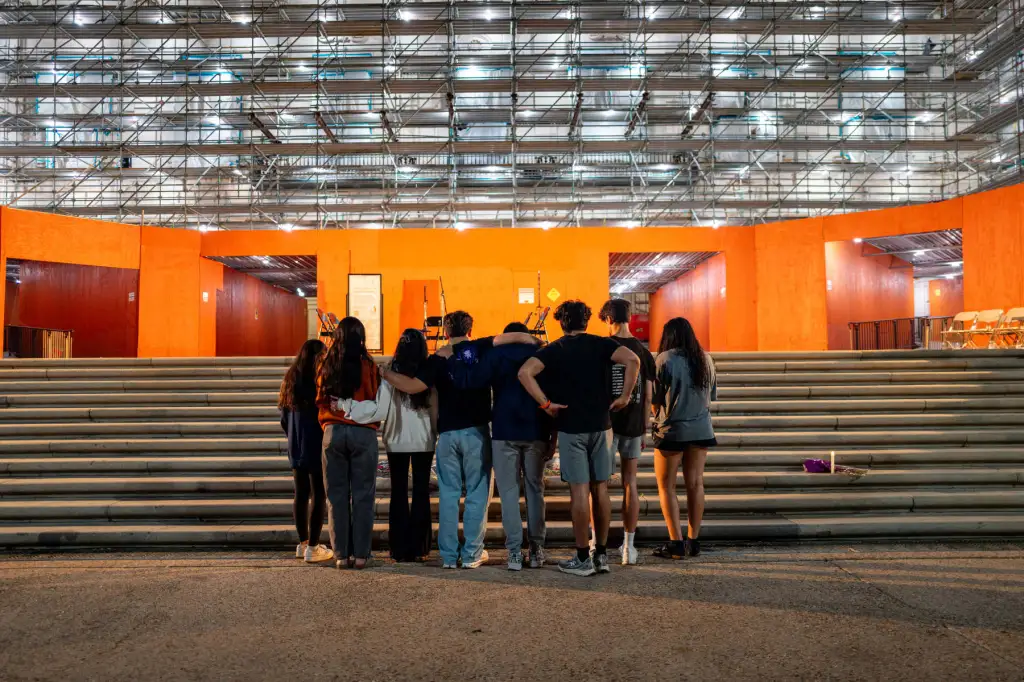
(Brandon Bell/Getty Images)
Then, Sanchez left the blue stronghold of Chicago to attend Michigan State University, the site of a 2023 mass shooting that occurred before the rising junior had enrolled.
“That was something that was also eye-opening,” she said. “You just kind of walk through those different stages, if you will, of what effect gun violence can have on a community.”
The fact that Michigan is a purple state has at times made her nervous, even though Gov. Gretchen Whitmer, a Democrat, has signed several gun safety laws, including universal background checks for firearm purchases.
Students such as Sanchez and Ambre are not alone in their concerns about gun violence. The 2024 State of Higher Education Study by Gallup and the Lumina Foundation found that 81 percent of current and prospective students agree that gun policies influenced their enrollment decisions. Additionally, a third of students who attend classes in person said they worried a fair amount about campus gun violence. Over 14,000 students took part in the survey.
“At the end of the day, everyone should feel safe going to college,” Ambre said. “That’s supposed to be like the most fun four years of your life. It’s not supposed to be something that’s ruined by a shooting.”
When Lotus Lloyd decided to leave the political battleground state of Michigan to attend Oberlin College in red-leaning Ohio, the attitudes there didn’t particularly worry him. Then, just as he was due to start his first year, the Supreme Court reversed Roe v. Wade, and Ohio’s six-week abortion ban took effect.
“I was just really scared, really panicked,” recalled Lloyd, who is transgender and active in Advocates for Youth, a nonprofit that focuses on young people’s right to bodily autonomy. “I was concerned not only about myself but about even just the people I would meet — scared, feeling powerless to even know or support someone.”
The 2024 State of Higher Education Study found that 71 percent of current and prospective students said reproductive healthcare policies were at least somewhat important in their college enrollment decisions. Eighty percent of current and prospective students preferred states with greater access; 86 percent of Democrats and 63 percent of Republicans agreed.
In October 2024, a judge permanently blocked Ohio’s so-called “heartbeat” abortion ban, a relief for Lloyd but not the end of his concerns. As a transgender person, he’s been deeply troubled by the 2025 enactment of Ohio’s bathroom bill, which requires K–12 schools and college students to use restrooms, locker rooms and shower facilities based on their assigned sex at birth. Even at a liberal school like Oberlin, Lloyd doesn’t feel entirely at ease.
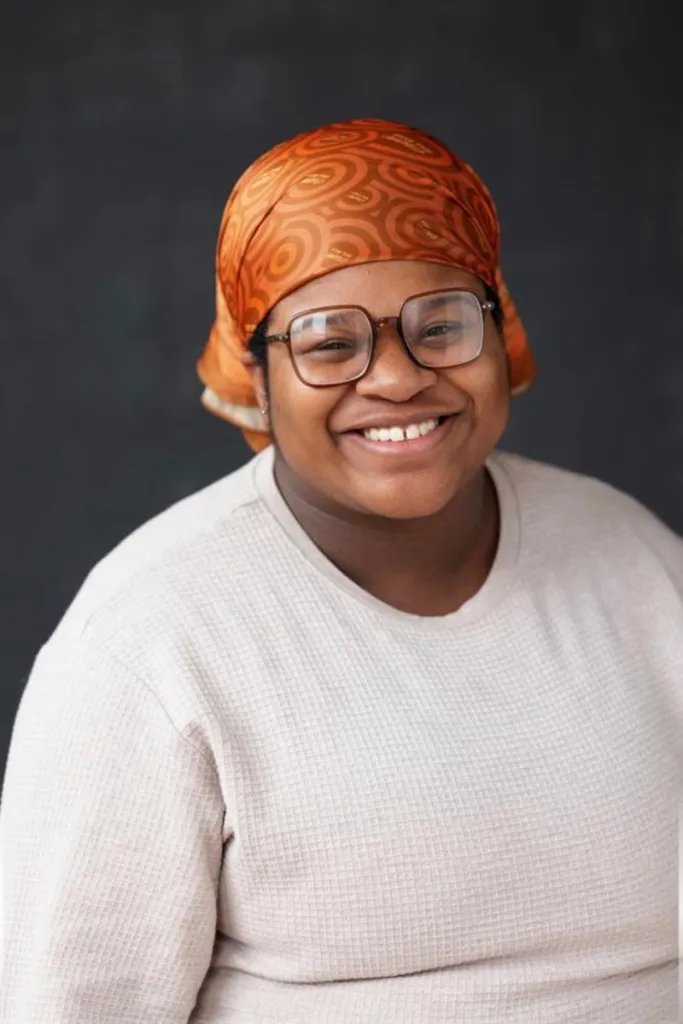
(Courtesy Lotus Lloyd)
Discussing Ohio broadly, Lloyd said, “I think that it’s hard to see it become a more unsafe place for trans people like myself.” Yet Lloyd also pushes back at generalizations of red states. “I don’t think of conservative places as unlivable… because people are organizing,” he said. “People are doing the work. People are providing care, no matter what.”
While some progressive students may consciously avoid conservative states, the research indicates the opposite is also true. David Strauss, a principal with Art & Science Group, a consulting and research firm that has studied these trends, noted that students on the right are excluding schools at similar rates as their liberal peers.
“It’s the moderates who are less likely to cite political considerations,” he explained. “The conservatives seem to be quite general.” They reason that certain states are “too Democratic” without naming the array of issues that liberal young people typically cite — from voter suppression to LGBTQ+ rights.
Students most frequently rule out attending college in Alabama, California, Florida, New York and Texas, according to a fall 2024 study Strauss co-authored. “The general gist of this is that there’s a significant minority of students who are sorting themselves into places where they think they’re going to feel more comfortable politically.”
Since the 1980s, colleges have grown more polarized in terms of student political beliefs, according to a 2025 study from the Annenberg Institute at Brown University. Schools with liberal student bodies have attracted more such students, and the same is true for institutions known for appealing to conservative students.
“Political Views and College Choices in a Polarized America,” a 2025 research study, found that liberal students were willing to spend an additional $2,617 on a college with fewer conservative classmates and $1,162 more for one with more progressive peers. Conservative students, meanwhile, were willing to pay $2,201 to avoid liberal classmates.
Trinity Williams, a rising junior at Howard University, offers an alternative viewpoint. She grew up in Chattanooga, Tennessee — a red state — certain that she wanted to attend a historically Black college. Politics didn’t drive her interest. She just loved the 2002 marching band movie “Drumline,” which is set on a fictional HBCU campus.
“My parents were like, ‘Well, this is something that interests you,’ and they actually started introducing me to HBCU campuses,” she said.
At Howard, she’s appreciated the chance to interact with people who hold diverse perspectives. She sharpened that mentality through her participation in Girls Inc., a nonprofit that empowers girls through direct service and advocacy. Williams is an alum of the organization, which has recently partnered with the nonprofit Henry Luce Foundation to help young women engage in conversations with people whose beliefs may differ from their own.
Stephanie Hull, president and CEO of Girls Inc., said that their members seek an environment where they can participate in dialogues about a wide range of issues.
“Our girls talk about looking for a campus that will create those conditions — not so much that the environment’s already kind of made up like a comfy bed for them, but that they won’t encounter a bad kind of friction, that they’ll only encounter that good kind of friction that leads to an interesting conversation,” Hull said.
Jason Bedford, senior vice president at Kaplan, which in May published its survey of 500 high school students about college choice, pointed out that 56 percent of students think it’s important to attend a college where their peers hold similar political views — but 32 percent disagree. “The headline for us as we got into this was not about uniformity; it was about complexity, and that young people today are not speaking in a singular voice,” Bedford said.
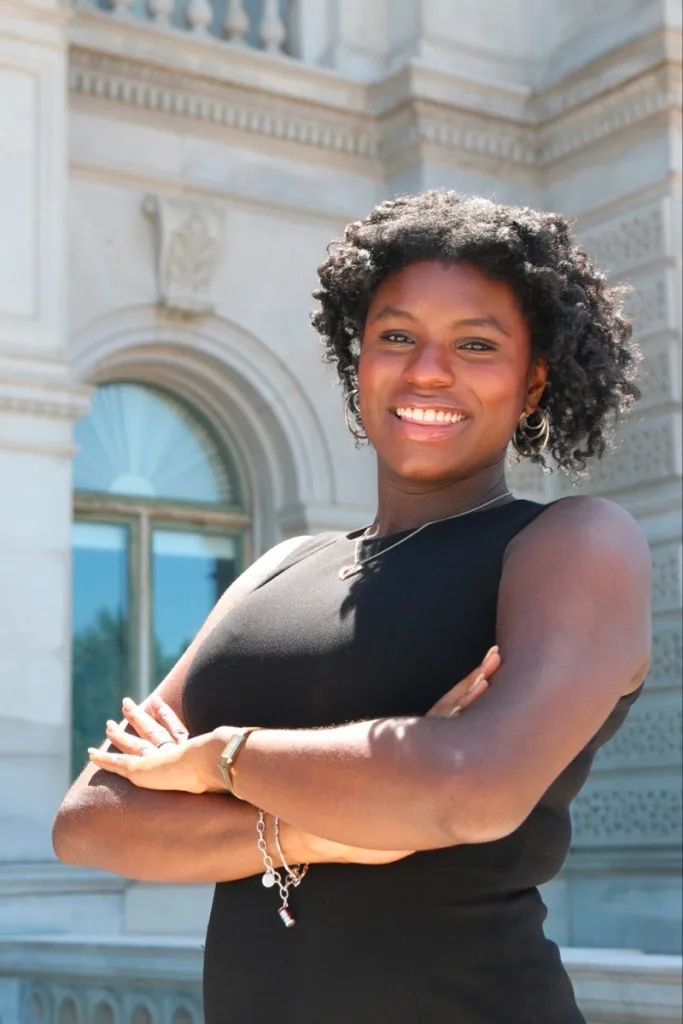
(Courtesy of Girls Inc.)
While students like Williams may attend HBCUs because they’ve idealized doing that since childhood, other young people are choosing them, in part, due to “the culture wars,” according to Jonathan Holloway, president of the Luce Foundation and former president of Rutgers University. Such students may also crave rigorous debates, but they want “to feel that they are at a place that does not judge them,” he said. They don’t want to disagree with peers and feel like their right to be on campus is in question. Regardless of their political views, Holloway said, they desire “a sense of belonging.”
Pam Royall, head of research at EAB Enrollment Services, which has tracked college choice factors for over a decade, said that politics did not become a dominant factor until recently. A 2025 EAB survey found that 29 percent of students have ruled out a school for political reasons.
What’s significant, Royall said, is how political divides are redefining what it means to be safe on campus. “This definition has been expanded. It’s not just crime statistics or what they think in terms of campus police or the systems in place to keep their son or daughter physically safe, but also that the child will have this welcoming experience,” she said.
The challenge for institutions, then, is to compel students to attend in spite of state politics, Strauss said. “If you’re a conservative kid who’d rather not go to school in Massachusetts, but you get into Harvard or MIT or Wellesley, you might choose to go because it has an appeal that’s greater than the thing holding you back,” he said.
For students like Lloyd, balance is key. Young people need to think critically about how they engage college campuses and the states in which they’re located. But students also need to consider their “possibilities in those spaces,” Lloyd added. “Let’s challenge our thinking sometimes.”